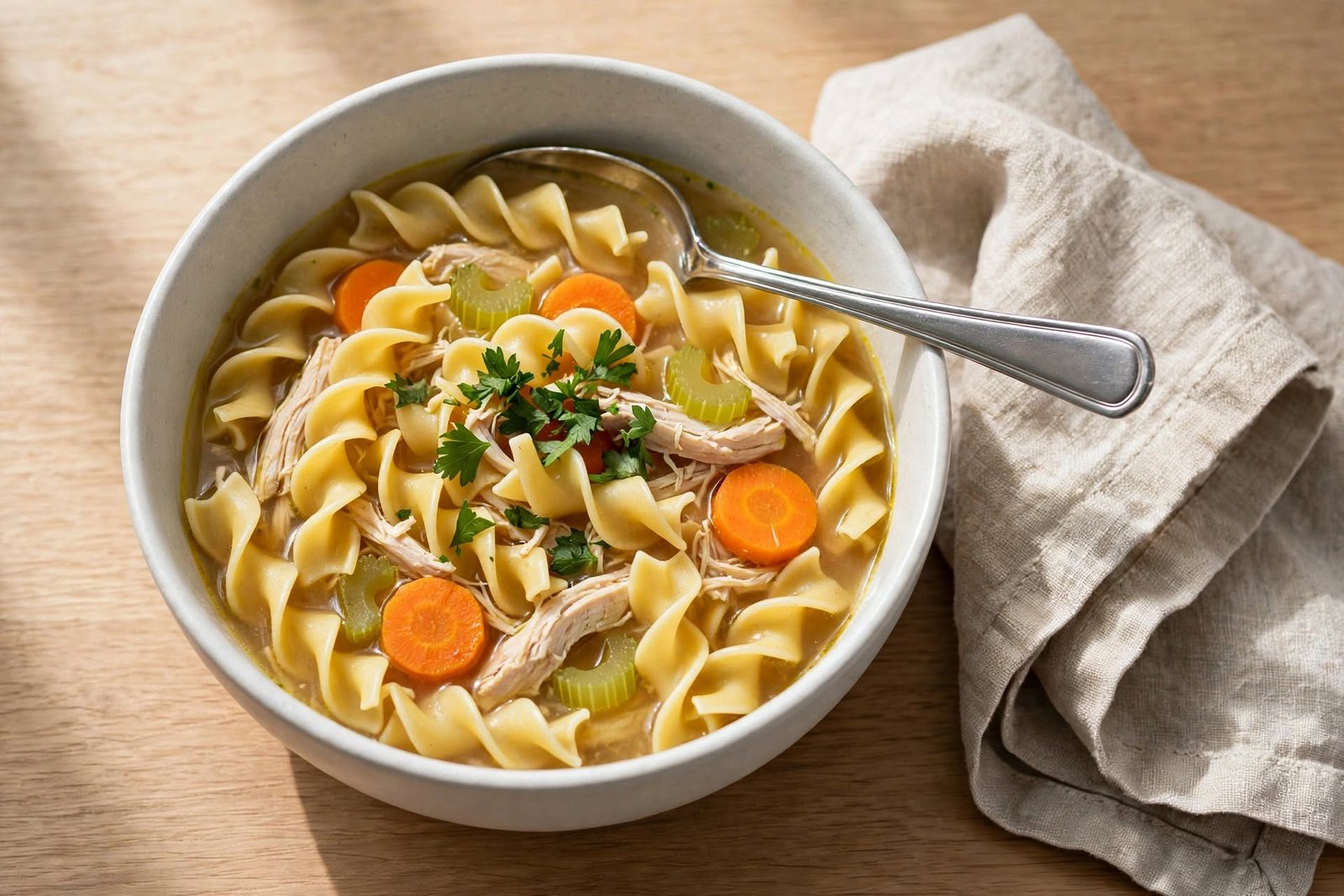
Perfect Homemade Chicken Noodle Soup: 5 Common Mistakes You Must Avoid
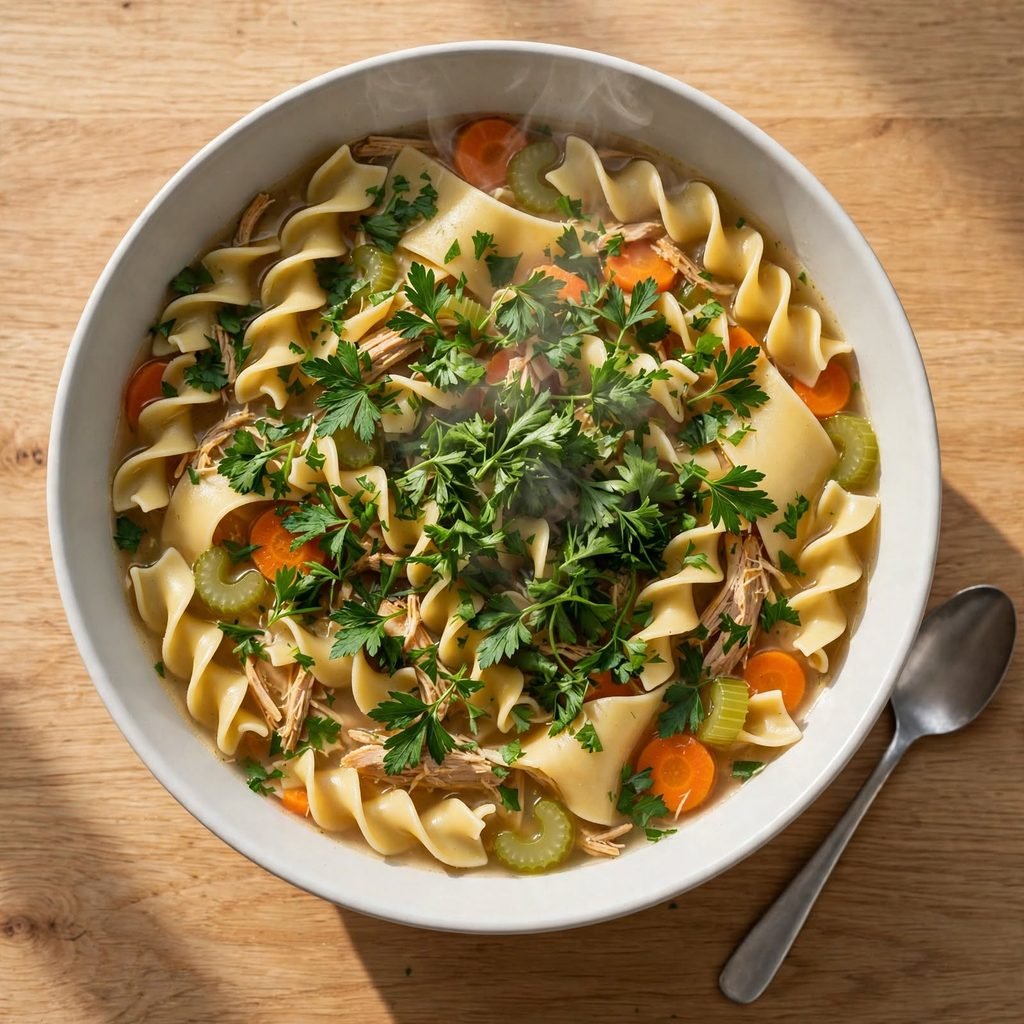
Table of Contents
What Usually Goes Wrong With Chicken Noodle Soup
Three problems show up again and again with chicken noodle soup.
Mushy noodles. Egg noodles keep soaking up liquid even after the heat goes off. By the time you sit down, they’re swollen and soft. This happens because most recipes let the noodles sit in hot broth long after they’re done cooking.
Watery, flat broth. The soup smells good but tastes thin. The usual cause: the vegetables didn’t spend enough time cooking in fat before the liquid went in. Skip or rush that step and you miss the whole flavor base.
Dry, stringy chicken. A hard, rolling boil pushes chicken past the point of being juicy — especially lean breast meat. Once that happens, no amount of broth fixes it.
This recipe for homemade chicken noodle soup solves all three, without any complicated moves.
Why This Chicken Noodle Recipe Works
The vegetables go in butter first. They get 6 to 7 full minutes in the pot before any liquid goes in. That time pulls out their natural sweetness and builds the flavor base.
The chicken simmers gently. A gentle simmer means small, slow bubbles rising calmly — not a hard, rolling boil. That lower heat keeps the meat moist and easy to shred.
The noodles go in last. The pot comes off the heat the moment they’re just tender. They stop cooking. For this easy chicken noodle soup, that one change is the difference between a great bowl and a soggy one.
Ingredients
This recipe makes 6 servings.
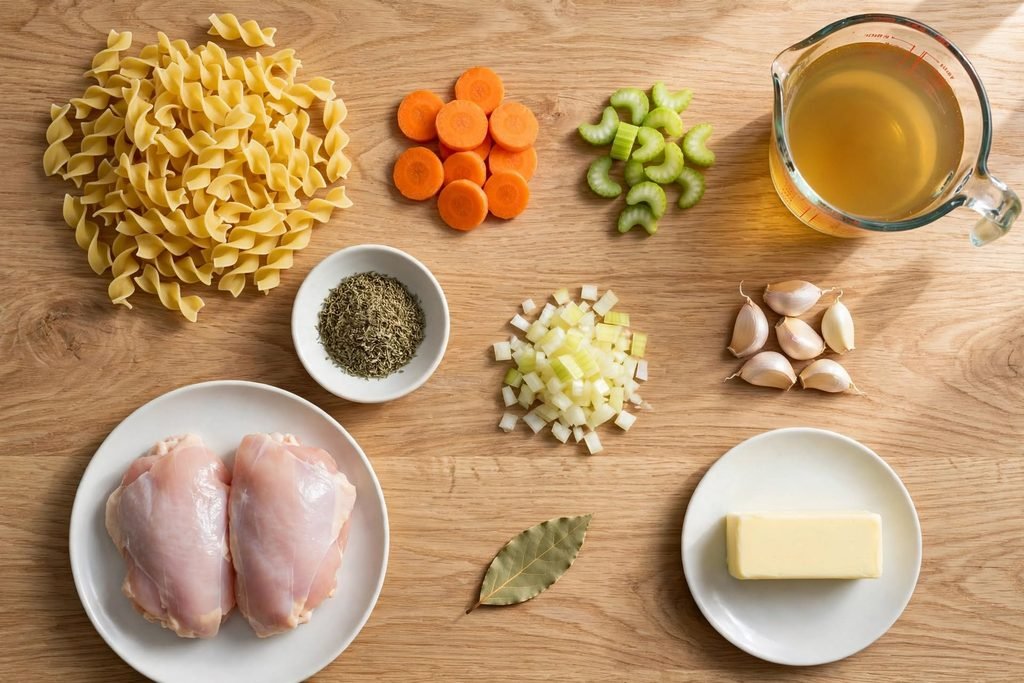
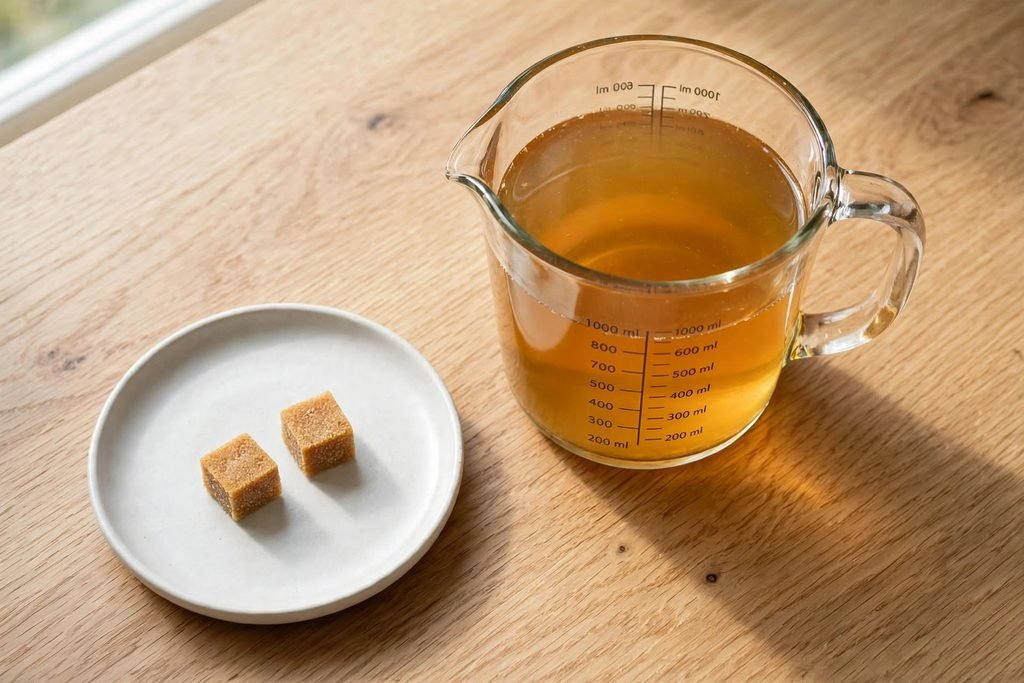
- 8 cups / 1.9L low-sodium chicken broth — low-sodium gives you control over salt at the end. Swap: chicken stock works the same way. For bouillon cubes — small compressed blocks of concentrated stock — dissolve 2 cubes in 8 cups of hot water.
- 1½ lbs / 680g boneless, skinless chicken thighs or breasts — thighs stay juicier because they have more fat through the meat; breasts work too, just watch the heat
- 2 medium carrots / 200g — peeled and sliced into ¼-inch / 6mm rounds
- 3 stalks celery / 150g — sliced into ¼-inch / 6mm pieces
- 1 medium yellow onion / 180g — diced into small pieces (about ½ inch / 1cm)
- 3 cloves garlic — minced (chopped into very small bits)
- 2 tbsp / 28g unsalted butter — or olive oil for a dairy-free version
- 1 tsp dried thyme
- 1 bay leaf — a dried leaf that adds quiet background flavor; remove it before serving
- 2 cups / 110g wide egg noodles, dry — Swap: rotini or penne work well; for gluten-free pasta, use the package cook time as your guide
- Salt and black pepper — added to taste at the end; taste the soup before adding salt if your broth is already salted
- 2 tbsp / 8g fresh parsley, chopped — optional, stirred in at the very end for freshness
Before You Start
Take 10 minutes to prep before the stove goes on. Everything will be ready to add in order.
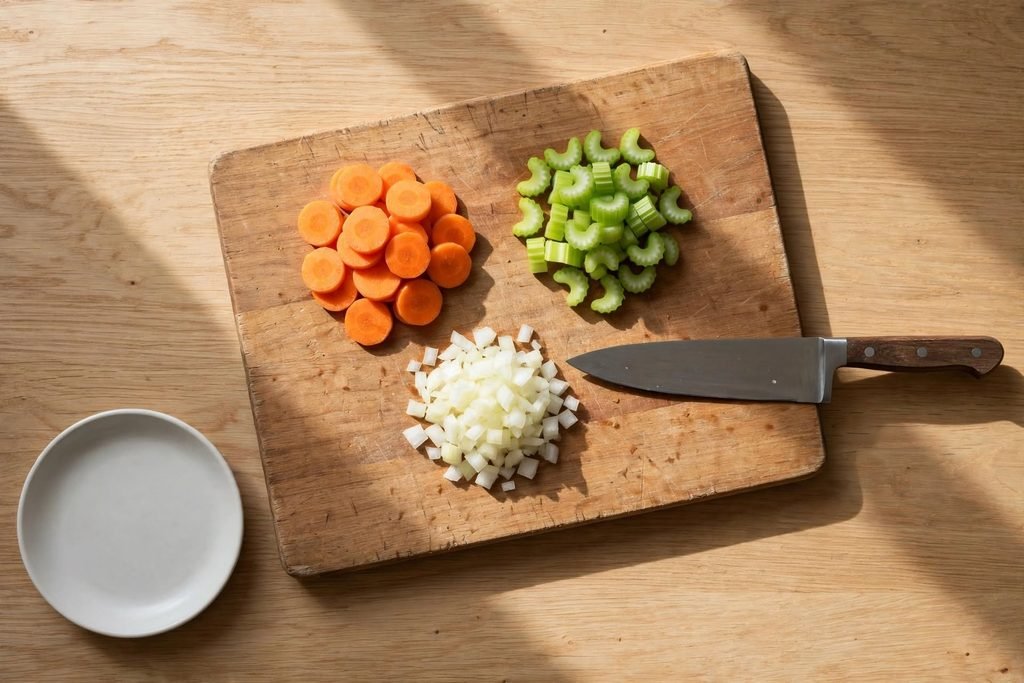
- Carrots: peel, then slice into rounds about ¼ inch / 6mm thick
- Celery: slice into pieces the same thickness as the carrots
- Onion: dice into small pieces, roughly ½ inch / 1cm
- Garlic: peel and chop into very small bits, or press through a garlic press
- Noodles: measure 2 cups and set in a bowl nearby — they go in at the end
- Parsley: if using, chop it now and set aside
How to Make Chicken Noodle Soup
Yield: 6 servings | Prep: 15 min | Cook: 40 min | Total: 55 min
Step 1 — Prepare the broth.
If using a carton, measure 8 cups / 1.9L into a large jug and set it near the stove. If using bouillon cubes, dissolve 2 cubes in 8 cups / 1.9L of hot water. Stir for about 1 minute until fully dissolved — the liquid should look completely clear with no solid bits floating in it.
Step 2 — Melt the butter.
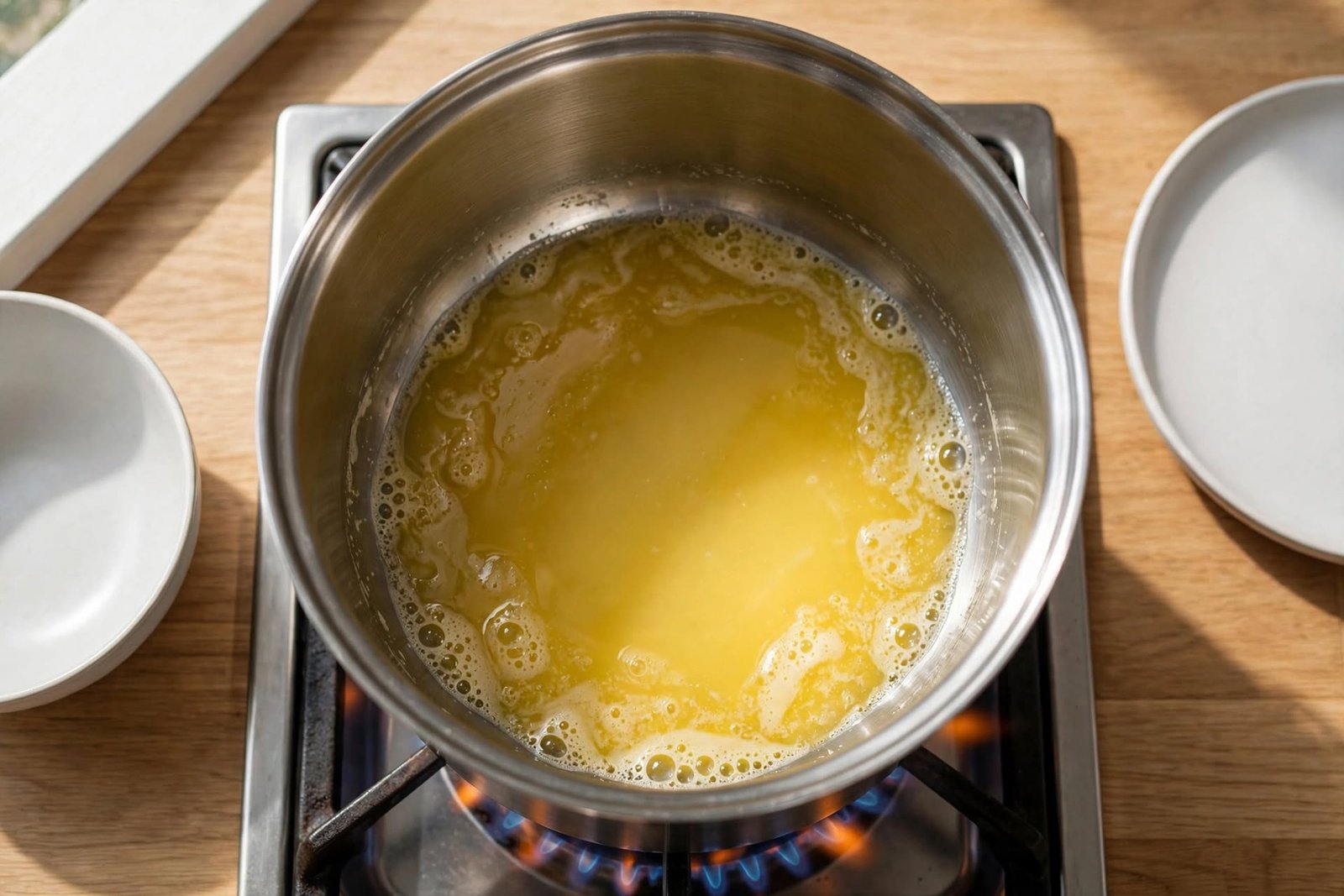
Set a large pot — at least 6 quarts / 5.7L — over medium heat. Add the 2 tbsp / 28g of butter. Heat until fully melted and slightly bubbly at the edges, about 1 minute.
Step 3 — Cook the vegetables.
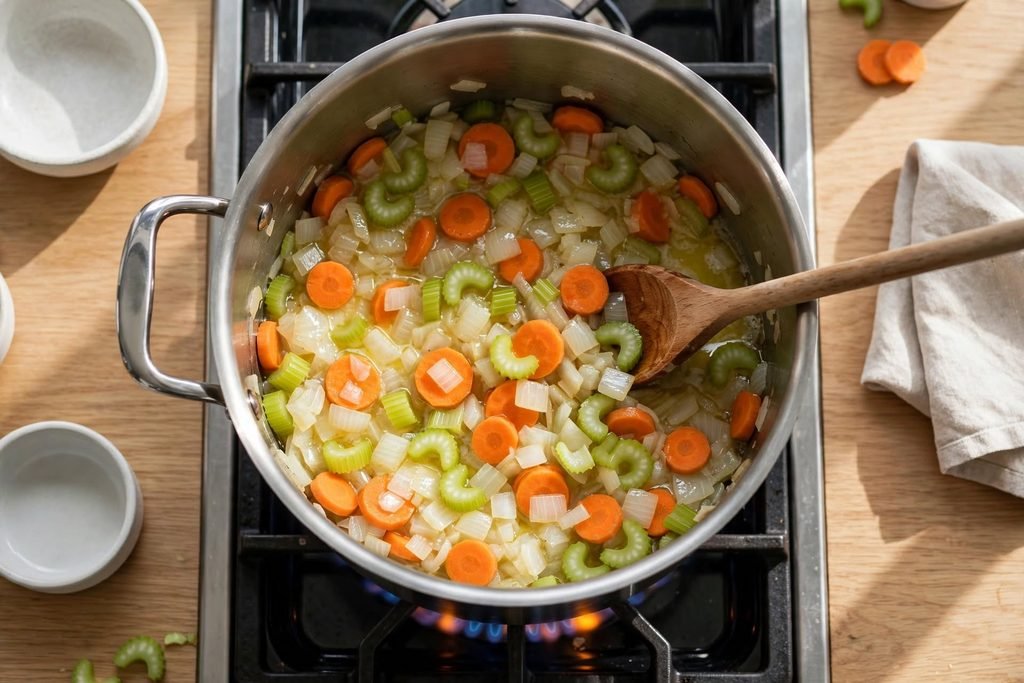
Add the diced onion, sliced carrots, and sliced celery all at once. Stir to coat them in the butter. Cook over medium heat, stirring every 2 minutes, until the onion is soft and looks see-through — not brown — about 6 to 7 minutes. This step builds the flavor base for the classic chicken noodle soup.
Step 4 — Add the garlic.
Stir in the minced garlic. Cook for 1 minute, stirring the whole time, until you can smell it strongly. If it starts to go golden-brown, lower the heat immediately — browned garlic tastes bitter.
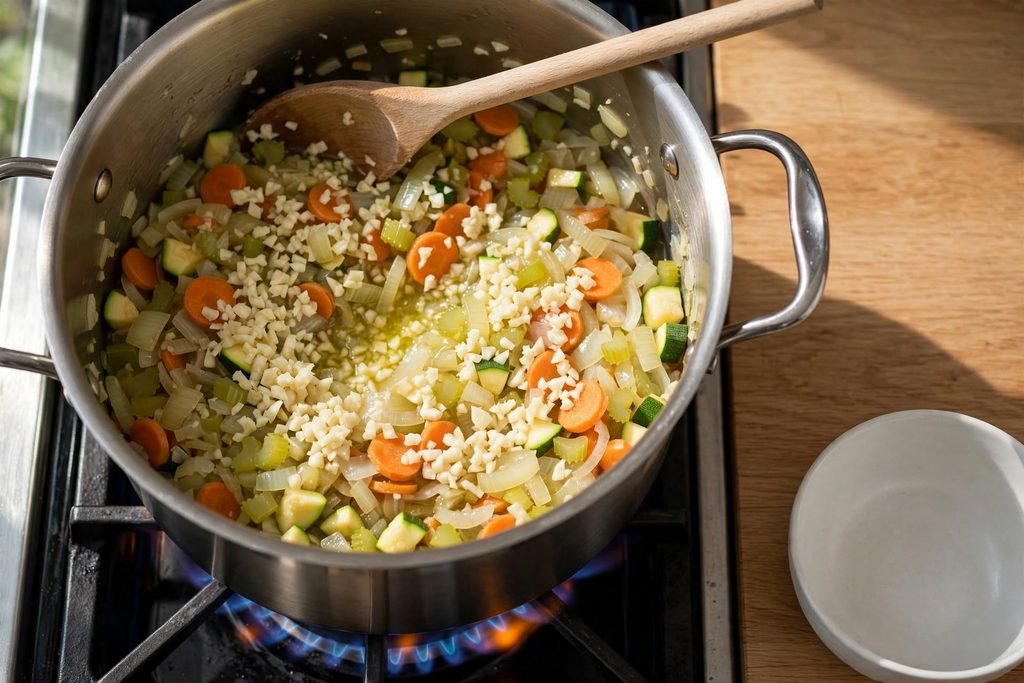
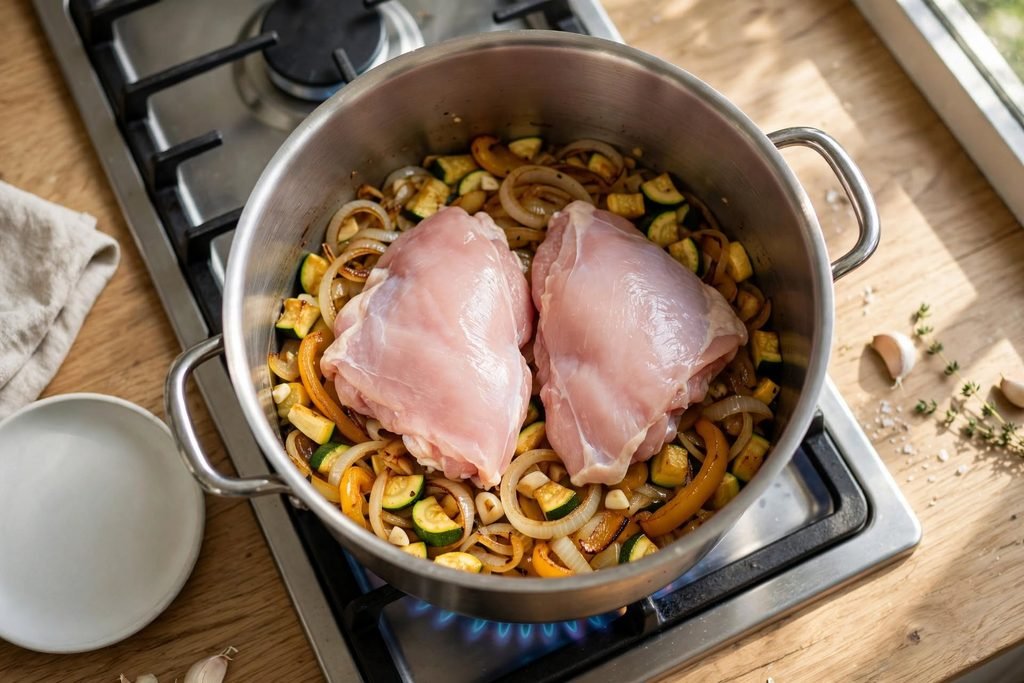
Step 5 — Add the raw chicken.
Place the chicken pieces into the pot in a single layer over the vegetables. A small amount of overlap is fine.
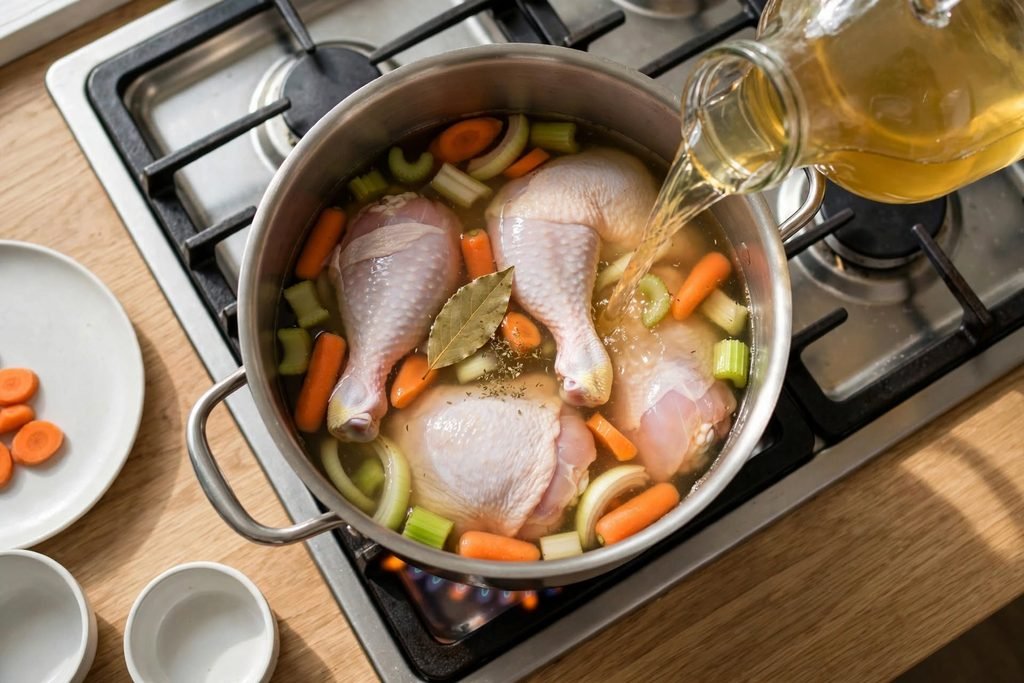
Step 6 — Pour in the broth and add the herbs.
Pour all 8 cups / 1.9L of prepared broth over the chicken and vegetables. Drop in the bay leaf and sprinkle in the dried thyme. Stir once to bring everything together.
Step 7 — Bring to a full boil.
Turn the heat to high. Wait until large, fast bubbles break across the whole surface of the soup, about 5 to 8 minutes.
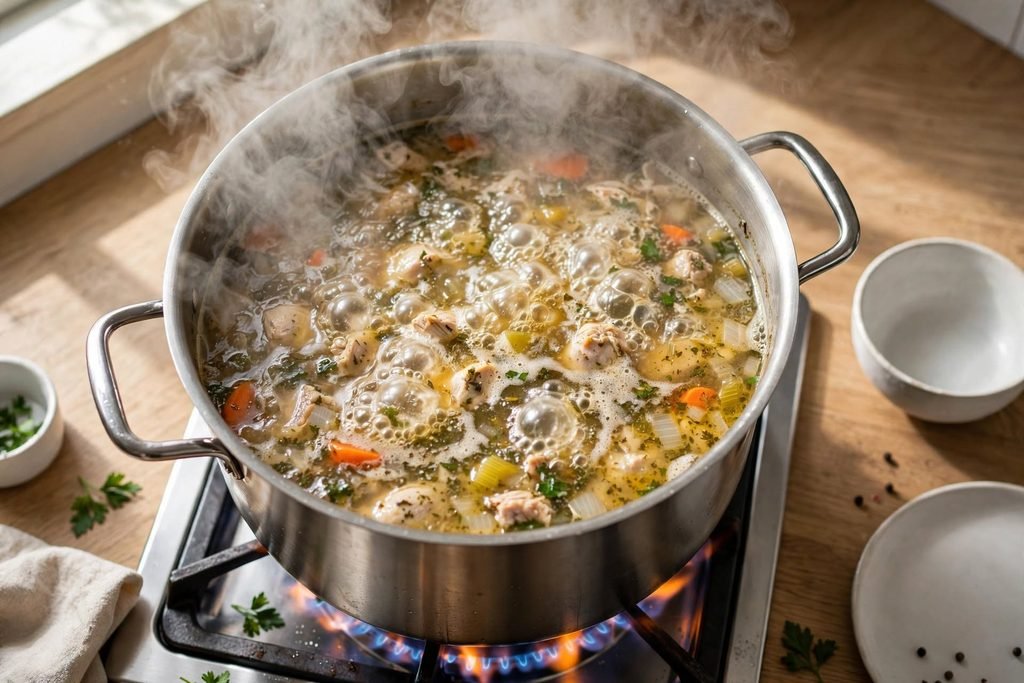
Step 8 — Reduce the heat and simmer until the chicken is cooked through
According to USDA guidelines, chicken must reach 165°F (74°C) internal temperature. Turn the heat to low or medium-low. The soup should settle into a gentle simmer — small, lazy bubbles drifting up slowly. (To reduce the heat means to turn it lower until the liquid calms down.) Cook for 15 to 20 minutes, until the thickest piece of chicken is fully cooked. To check: lift a piece out and cut into the center — it should be white all the way through with no pink.
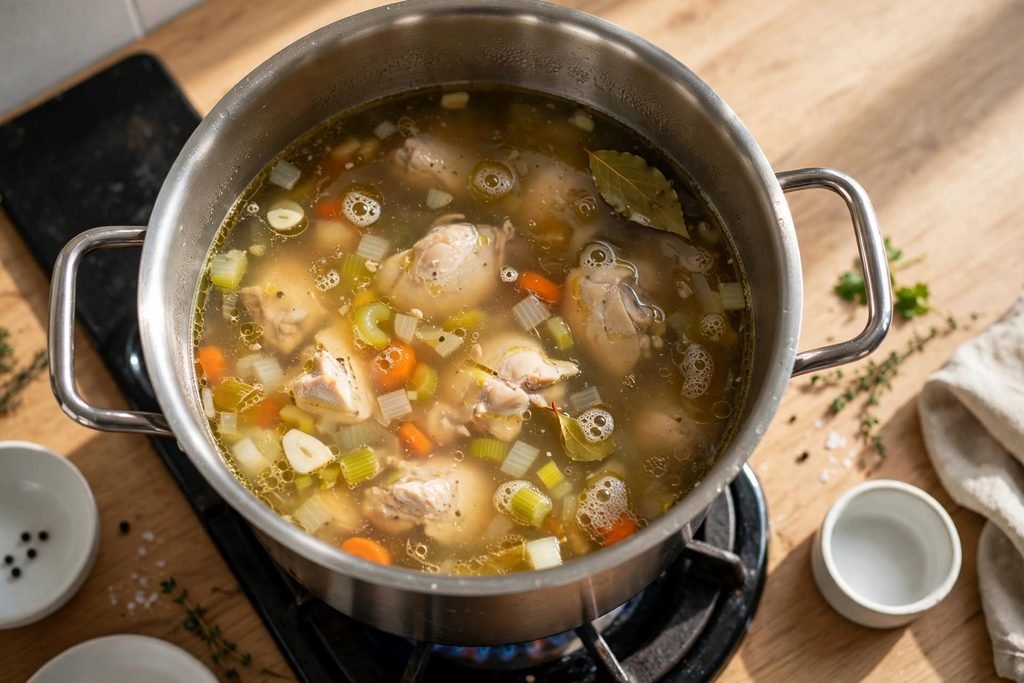
Step 9 — Lift out the chicken and shred it.
Use tongs to transfer the cooked chicken pieces to a cutting board. Use two forks to shred the meat: hold one fork still to anchor the piece and pull with the other fork in the opposite direction to create thin strips. This takes about 3 to 5 minutes.
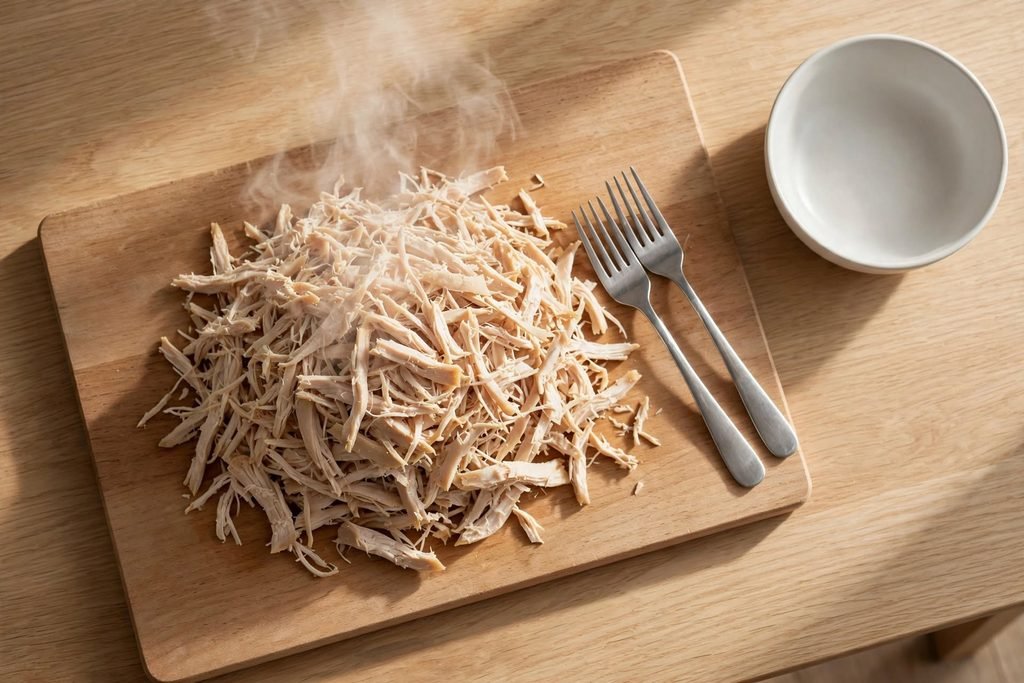
Step 10 — Return the shredded chicken to the pot.
Drop all the shredded chicken back into the simmering broth. Stir it in so it spreads through the soup.
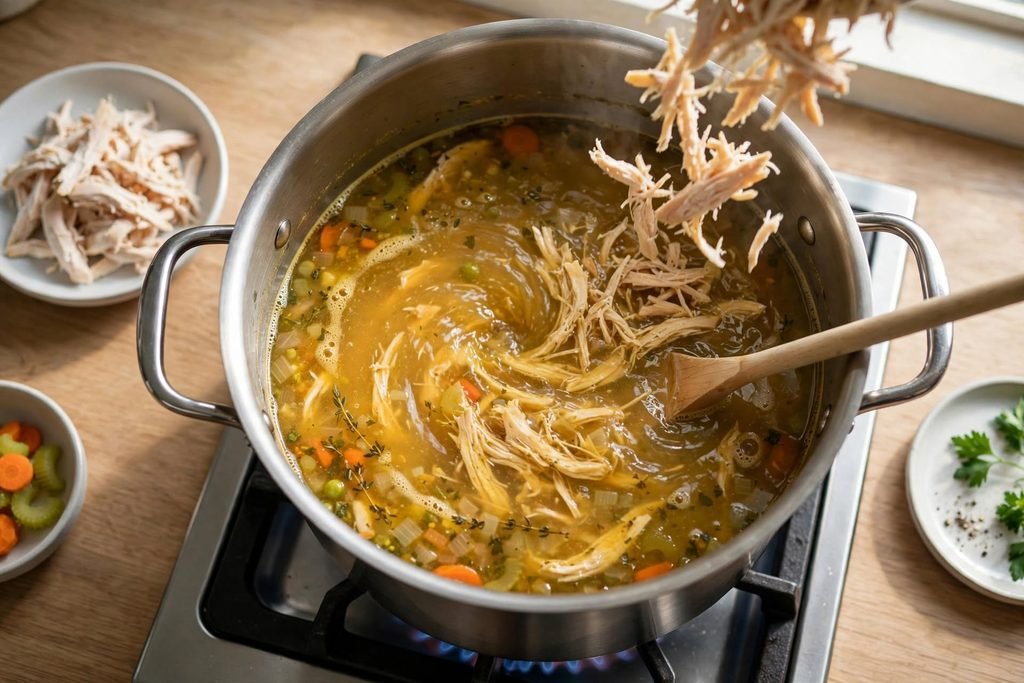
Step 11 — Add the egg noodles.
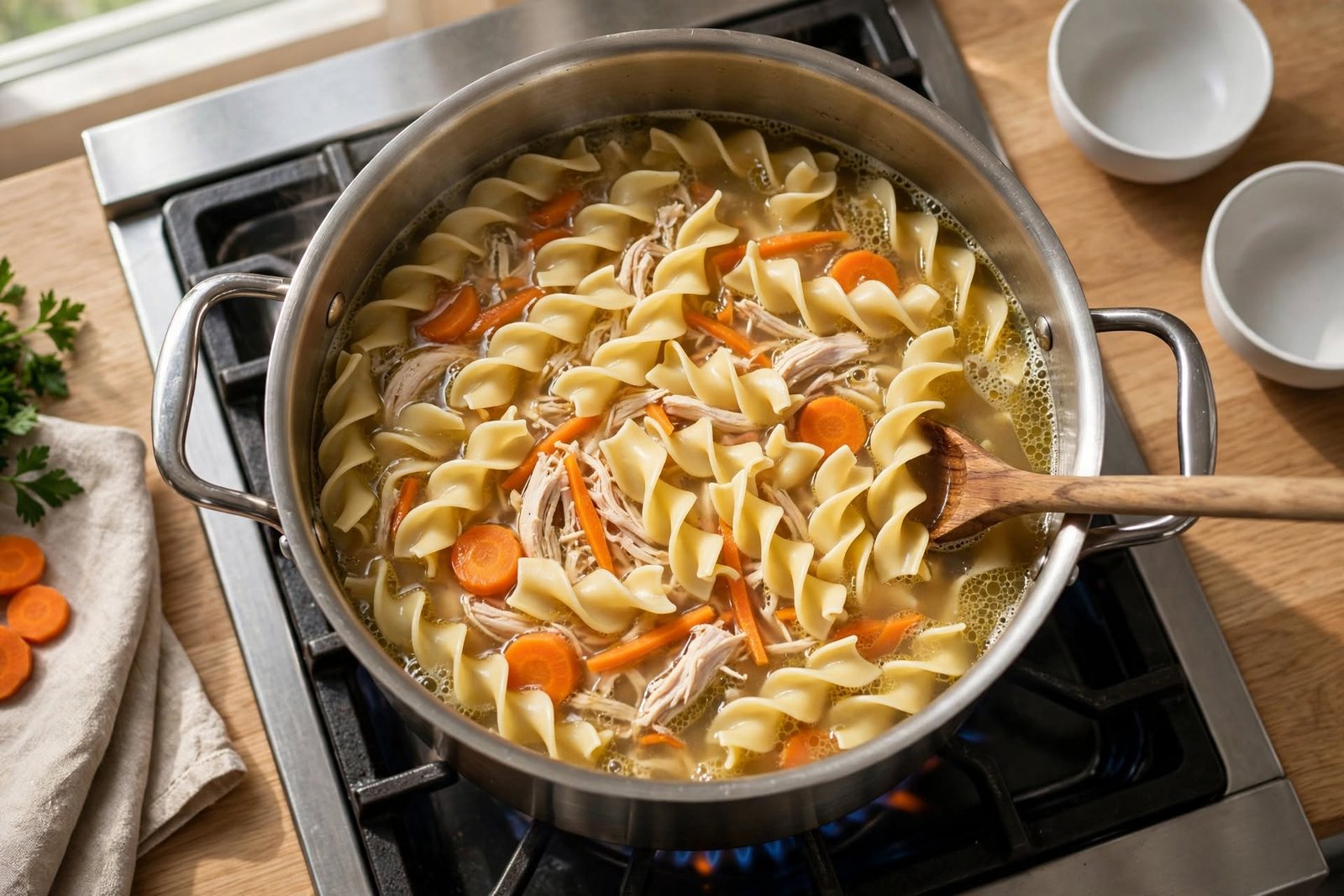
Pour the 2 cups / 110g of dry egg noodles directly into the soup. Stir so they are fully submerged in the broth.
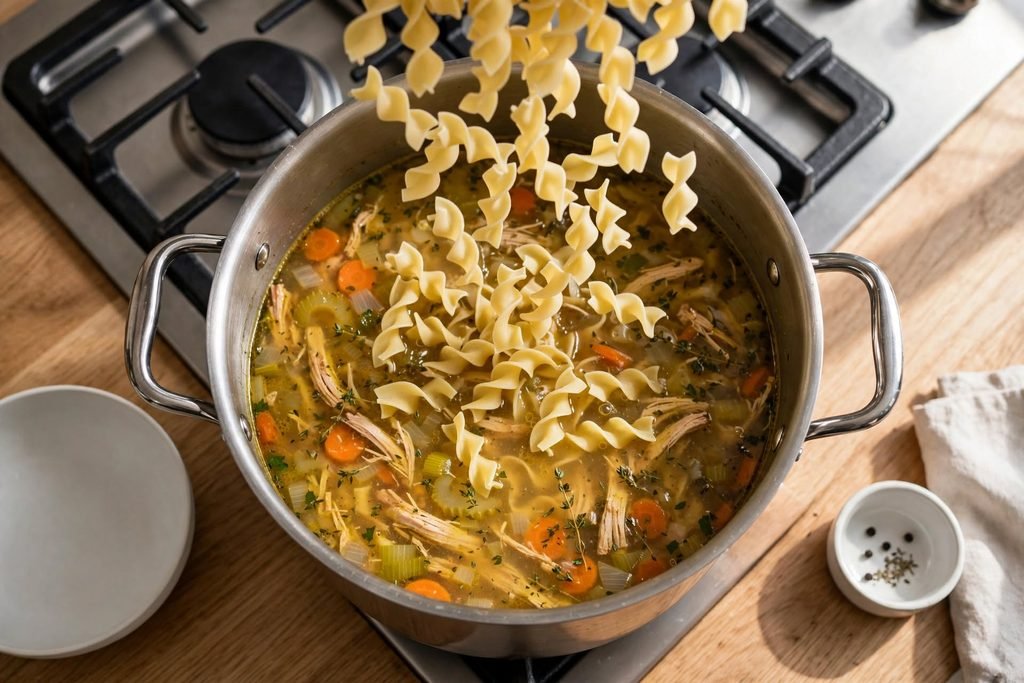
Step 12 — Cook the noodles until just tender.
Keep the pot at a gentle simmer over medium-low heat. Cook for 8 to 10 minutes, stirring every couple of minutes so the noodles don’t clump. Taste a noodle at the 8-minute mark — it should be soft all the way through but still have a tiny bit of firmness when you bite down. This is called al dente, an Italian phrase that means “to the tooth.” Take the pot off the heat at this point. The noodles will soften a little more as the soup sits, so don’t wait until they feel fully limp.
Step 13 — Season and serve.
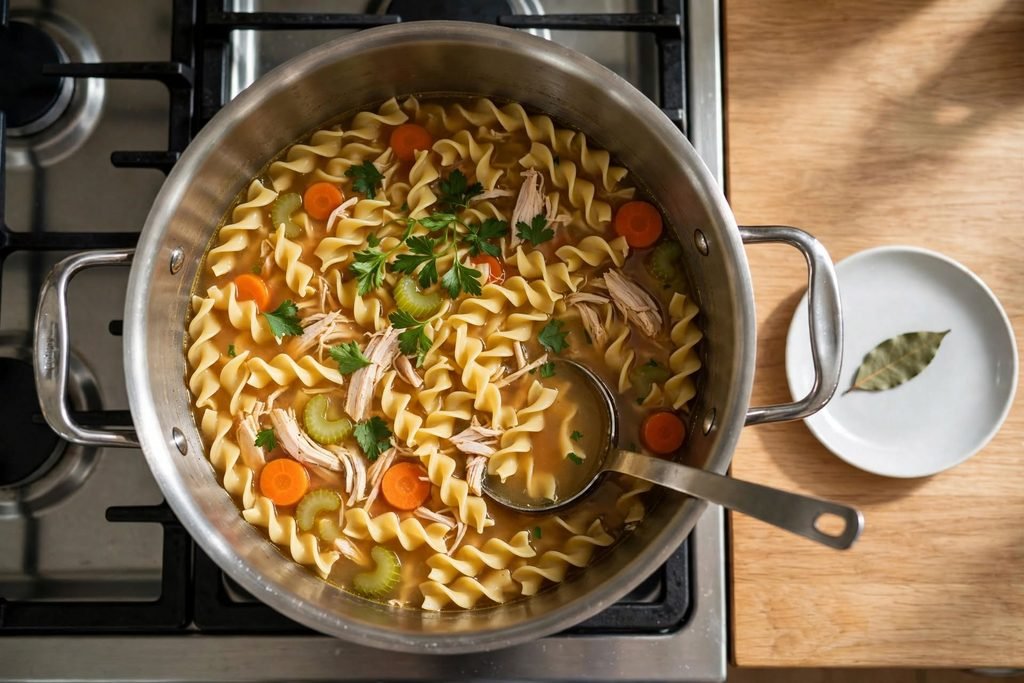
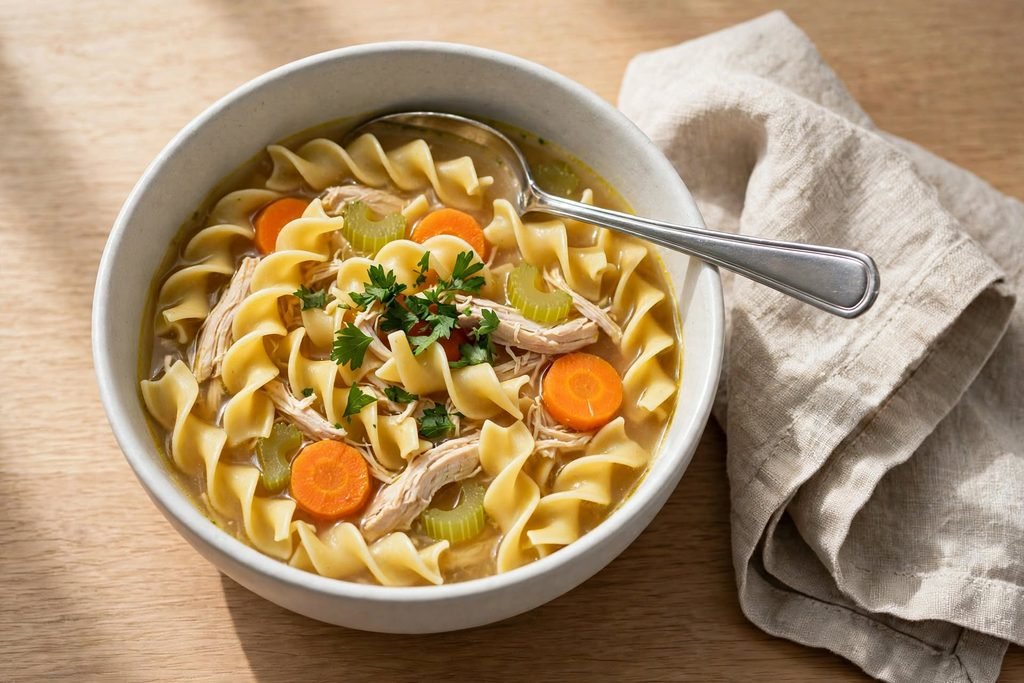
Remove and throw away the bay leaf. Taste the soup. If it needs salt or black pepper, add a small amount, stir, and taste again — repeat until the flavor is right. Stir in the fresh parsley if using. Ladle into bowls and serve hot right away.
Storage and Reheating
Fridge: Cool the soup to room temperature first. Store in a sealed container for up to 4 days.
The noodle problem: Noodles keep absorbing liquid in the fridge. By day 2, they may be very soft. The fix is to store leftover soup without the noodles. Make only as many noodles as you’ll eat right now. Keep the broth and chicken in the fridge separately, and add fresh noodles when you reheat.
Reheating: Pour into a small pot over medium-low heat. Stir gently and heat until steaming, about 5 to 7 minutes. Don’t let it boil hard — that dries the chicken out. If the soup has thickened in the fridge, stir in a splash of broth or water to thin it back out.
Freezing: Freeze the soup without noodles for up to 3 months. Noodles that freeze and thaw turn mushy. Store the broth and chicken in a sealed freezer-safe container. Thaw overnight in the fridge, reheat on the stove, then add fresh noodles in the last 10 minutes.
Make ahead: The base — broth, chicken, and vegetables — keeps in the fridge for up to 2 days before you add noodles. Cook the noodles right before serving.
Tips and FAQ For Perfect Chicken Noodle Soup
Why are my noodles soggy the next day?
This is the most common complaint with chicken soup from scratch. Noodles absorb liquid even after the heat goes off — and overnight in the fridge, they soak up even more broth. The fix: don’t store noodles in the soup. Cook only what you need right now, and keep the rest noodle-free. Add fresh noodles when reheating.
Thighs or breasts — does it matter?
Thighs are the better default. The fat in the meat keeps them moist through 20 minutes of simmering. Breasts work too, but they’re leaner and dry out faster. If using breasts, keep the simmer gentle — small, slow bubbles, not a rolling boil — and check at the 15-minute mark.
Can you use rotisserie chicken?
Yes. Skip the raw chicken and Steps 5, 7, and 8 entirely. After the garlic is cooked (Step 4), pour in the broth and bring it to a simmer. Add about 3 cups / 420g of shredded rotisserie chicken, then follow from Step 11 onwards.
How do you make the broth more flavorful?
The trick is to not rush the sauté step. A full 6 to 7 minutes of vegetables in butter — before any liquid goes in — is where the flavor base comes from. After that, use low-sodium broth so you control the salt. As the soup simmers, the flavor concentrates — meaning it gets stronger as some liquid slowly evaporates. Taste it after 10 minutes of simmering, and add a small squeeze of fresh lemon juice right at the end to brighten everything up.
Can this be made in a slow cooker?
Yes. Add everything except the noodles and parsley to the slow cooker. Cook on low for 6 to 8 hours or on high for 3 to 4 hours. Shred the chicken, switch the slow cooker to high, stir in the noodles, and cook for a further 25 to 30 minutes until just tender.
Looking for more warm, simple soups? Try our Creamy Tortellini Soup to make this recipe entirely from scratch, or see our Sausage Potato Soup
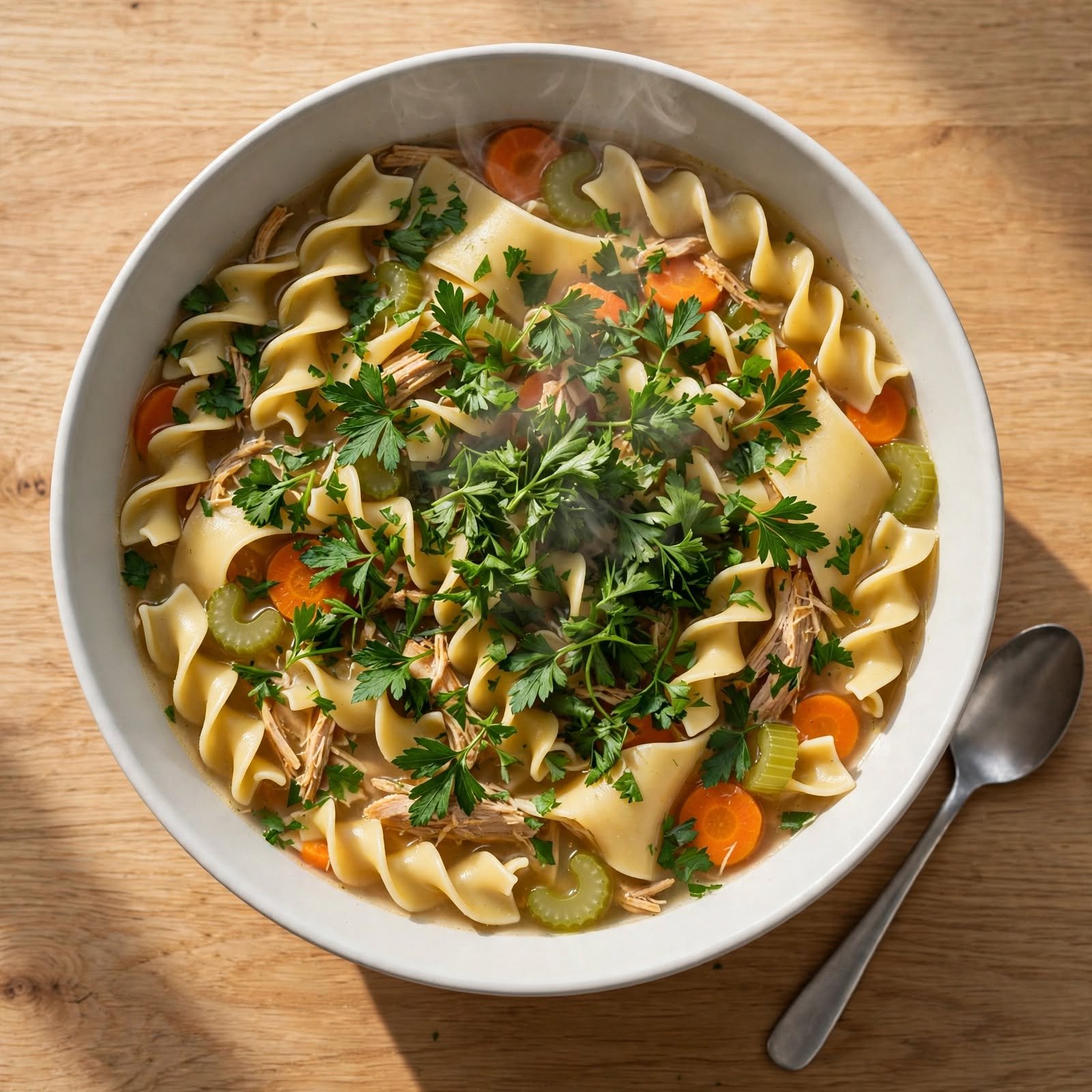
Perfect Homemade Chicken Noodle Soup: 5 Common Mistakes You Must Avoid
Ingredients
Method
- Prepare the broth. If using a carton, measure 8 cups / 1.9L and set near the stove. If using bouillon cubes, dissolve 2 cubes in 8 cups / 1.9L of hot water. Stir for about 1 minute until fully dissolved and the liquid is clear.
- Melt the butter. Set a large pot (at least 6 quarts / 5.7L) over medium heat. Add the 2 tbsp / 28g of butter and heat until fully melted and slightly bubbly at the edges, about 1 minute.
- Cook the vegetables. Add the onion, carrots, and celery. Stir to coat in the butter. Cook over medium heat, stirring every 2 minutes, until the onion is soft and see-through — not brown — about 6 to 7 minutes.
- Add the garlic. Stir in the minced garlic. Cook for 1 minute, stirring constantly, until fragrant. Lower the heat if it starts to turn golden-brown.
- Add the raw chicken. Place the chicken pieces into the pot in a single layer.
- Pour in the broth and herbs. Add all 8 cups / 1.9L of prepared broth, the bay leaf, and the dried thyme. Stir once to combine.
- Bring to a full boil. Turn the heat to high and wait until large, fast bubbles break across the whole surface, about 5 to 8 minutes.
- Reduce heat and simmer. Turn the heat to low or medium-low for a gentle simmer — small, slow bubbles only. Cook for 15 to 20 minutes, until the thickest piece of chicken is white all the way through with no pink when cut open.
- Shred the chicken. Transfer the chicken to a cutting board using tongs. Use two forks to pull the meat into thin strips, about 3 to 5 minutes.
- Return chicken to the pot. Add all the shredded chicken back into the broth and stir to combine.
- Add the noodles. Pour the 2 cups / 110g of dry egg noodles into the soup. Stir so they are fully submerged.
- Cook until just tender. Keep the pot at a gentle simmer over medium-low heat. Cook for 8 to 10 minutes, stirring every couple of minutes, until the noodles are soft but still have a very slight bite (al dente). Remove from heat immediately.
- Season and serve. Remove and discard the bay leaf. Taste the soup and add salt and black pepper a little at a time until the flavor is right. Stir in fresh parsley if using. Serve hot.
Notes
Freezing: freeze without noodles for up to 3 months.
Rotisserie shortcut: skip Steps 5, 7, and 8. Add 3 cups / 420g of shredded rotisserie chicken after Step 4, then follow from Step 11.
Nutrition is an estimate.