Best Baked Potato Soup: 3 Fixes for a Creamy, Never Gluey Bowl

Table of Contents
If you’ve made baked potato soup before, you’ve probably run into one of three things: it turned thick and pasty, almost like wallpaper paste; it stayed thin and watery no matter how long it simmered; or the sour cream broke into little curdled flecks right as you were about to serve it.
None of that is bad luck. The pasty texture usually means the potatoes got over-blended or the flour-and-butter paste was too heavy for the amount of liquid. The watery texture means the base didn’t get enough of that same paste, called a roux, to actually hold everything together. And the curdling happens when cold sour cream hits a pot that’s still at a hard simmer — the fat and liquid in it separate instead of blending in.
This recipe is built so none of that happens to you: a real roux for body, potatoes baked (not boiled) for true baked-potato flavor, and the sour cream stirred in only after the pot is off the heat.
Why This Recipe Is the Fix
The potatoes get baked whole in the oven instead of boiled or microwaved — that’s the one deliberate choice that sets this version apart, and it matters more than it sounds like it should. Boiled potatoes soak up water and turn waterlogged and mushy in a blended soup; baked potatoes stay dry and fluffy, so the soup gets thick from the potato itself, not just from extra flour. The roux is built the slow way — butter, then flour, cooked for a minute before any liquid goes in — so it never turns into lumps. And every dairy addition (milk, then later the sour cream and cheese) goes in gradually, off the heat when it matters most, so nothing breaks.
For more on why baking potatoes gives better texture than boiling, Serious Eats explains the science in detail.
Ingredients
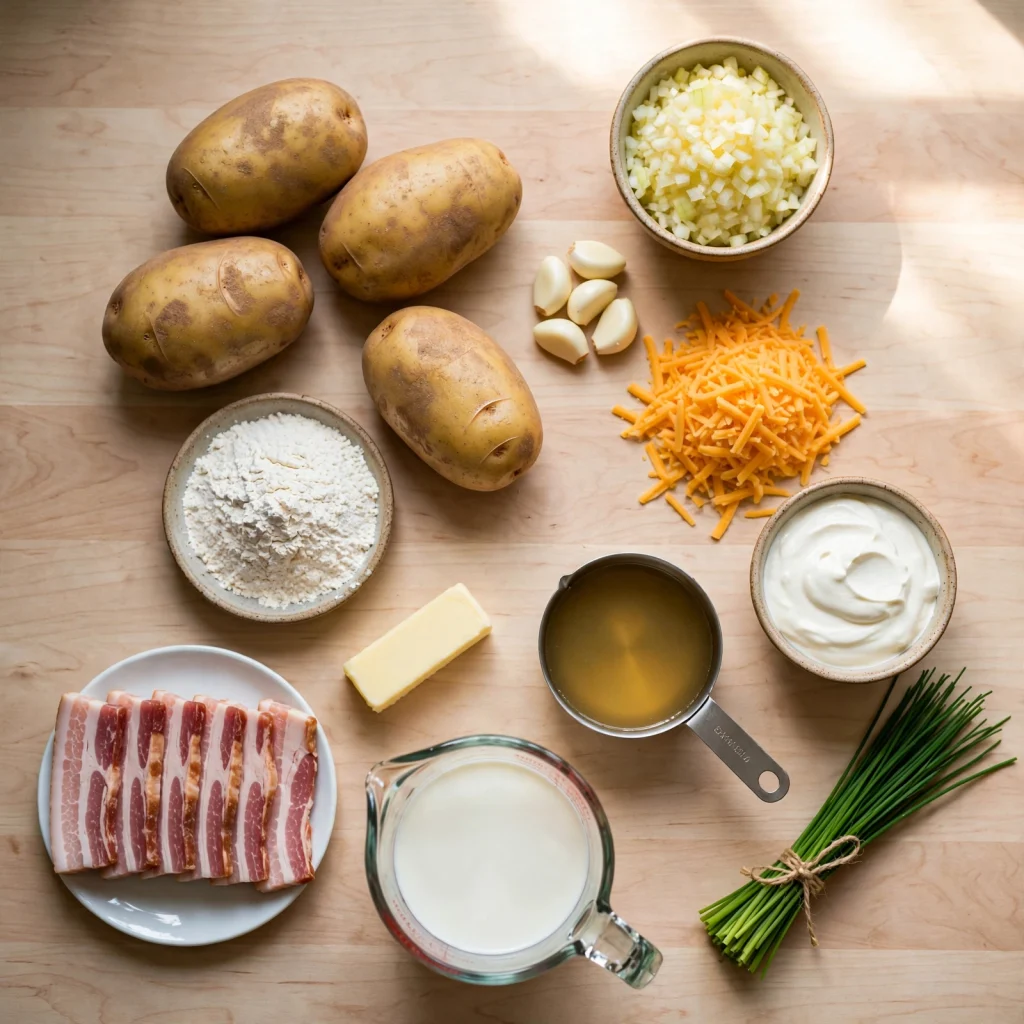
- 4 medium russet potatoes (about 2 lbs / 900g) — russets bake up dry and fluffy, which is what gives this soup its body
- 6 slices thick-cut bacon (streaky bacon in the UK)
- 3 tbsp (45g) unsalted butter
- 1/2 cup (75g) finely chopped yellow onion
- 3 garlic cloves, minced
- 1/3 cup (40g) all-purpose flour (plain flour) — this is what thickens the soup; don’t skip it or the soup will stay thin
- 2 cups (475ml) low-sodium chicken broth (or vegetable broth)
- 2 cups (475ml) whole milk
- 1 cup (240g) sour cream, at room temperature
- 1 1/2 cups (170g) shredded sharp cheddar cheese (mature cheddar), plus more for topping
- 1 tsp salt, plus more to taste
- 1/2 tsp black pepper
- 2–3 tbsp chopped chives or green onion, for topping
Want a little more richness? Swap half the milk for heavy cream, or stir a splash of hot sauce into your own bowl at the end.
Before You Start (Quick Prep)
- Finely chop the onion
- Mince the garlic
- Shred the cheddar cheese (freshly grated melts smoother than the pre-shredded bag kind)
- Chop the chives or green onion for topping

How to Make Baked Potato Soup
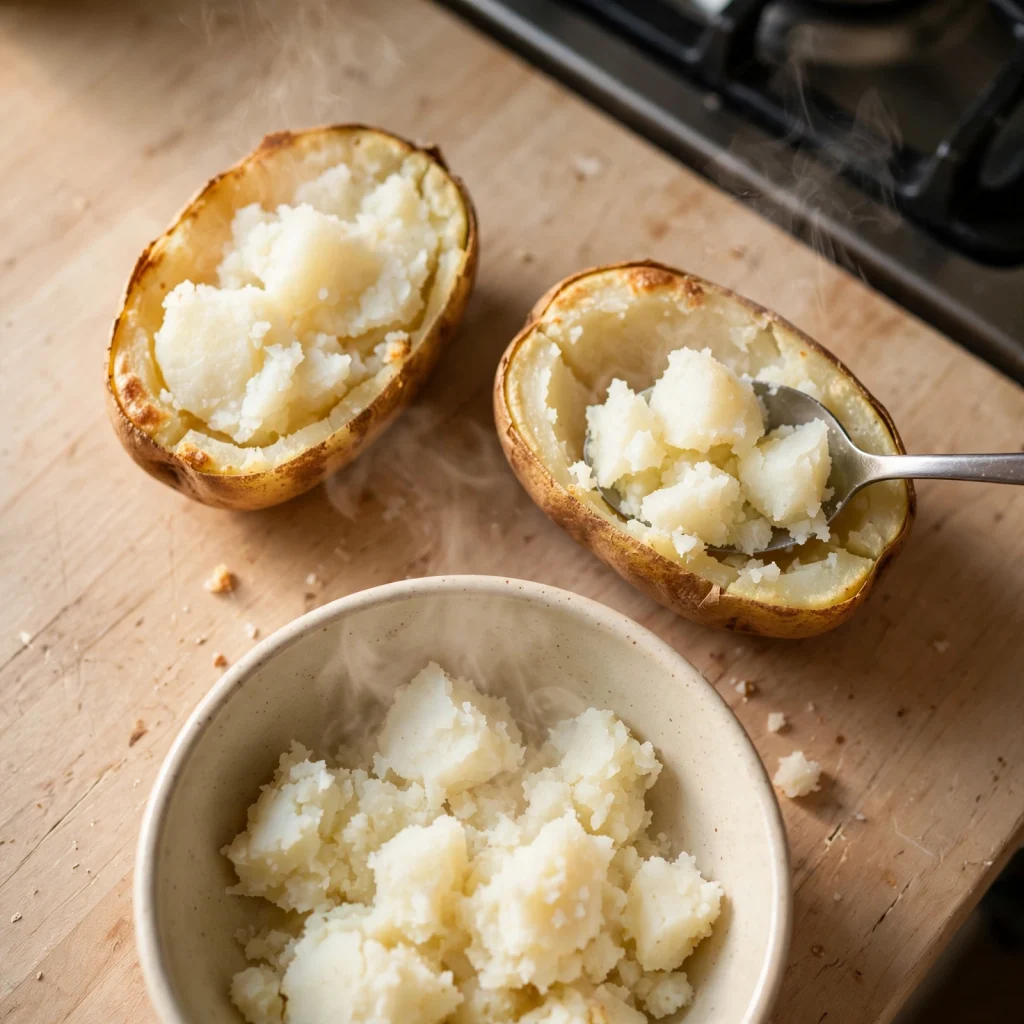
- Bake the potatoes first. Preheat your oven to 400°F (200°C). Pierce each potato a few times with a fork and bake directly on the oven rack for 45–60 minutes, until a knife slides in easily. Let them cool enough to handle, then halve, scoop the flesh into rough chunks, and set aside. Baking (instead of boiling) keeps the potatoes dry, which is a big part of why this soup doesn’t turn watery.
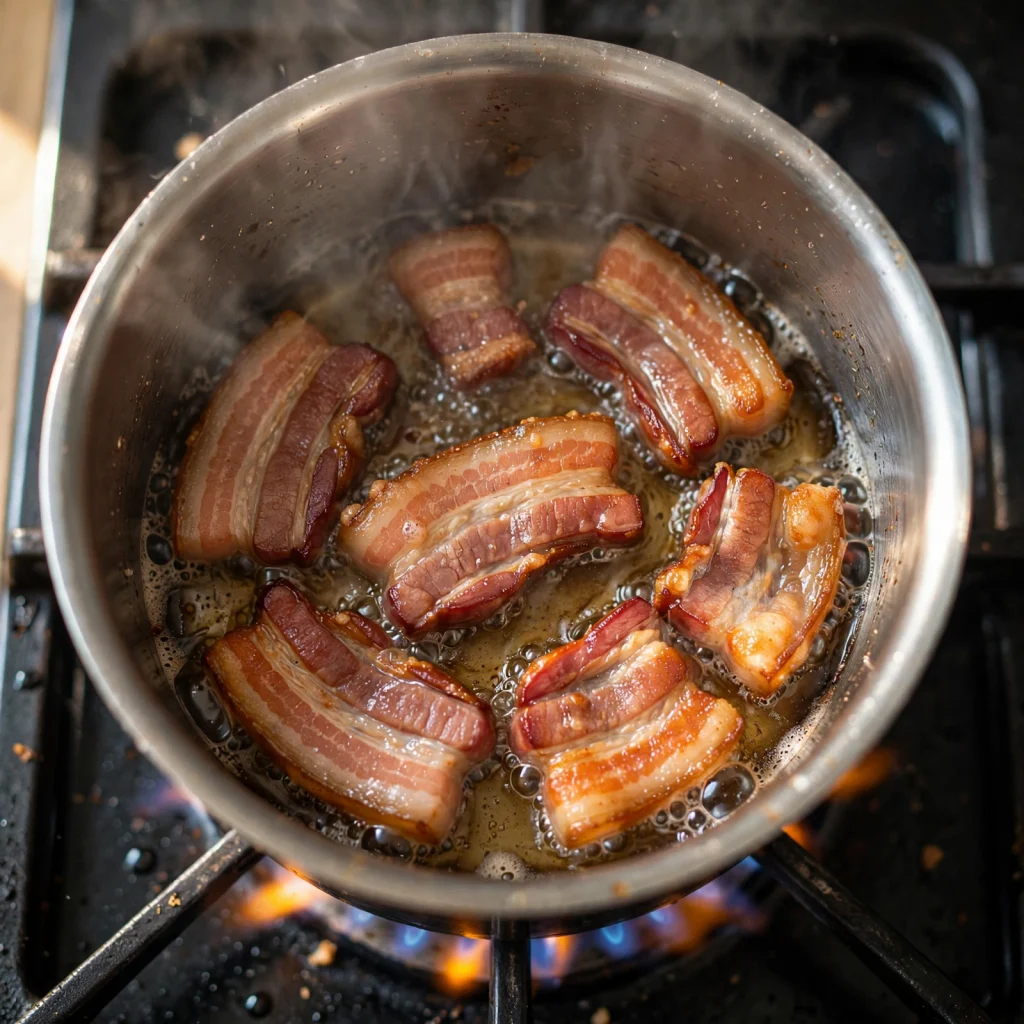
2. Cook the bacon. In a large pot or Dutch oven, cook the bacon over medium heat until crisp, 6–8 minutes. Transfer to a paper-towel-lined plate and crumble once cool. Keep about 1 tablespoon of the bacon fat in the pot and pour off the rest.
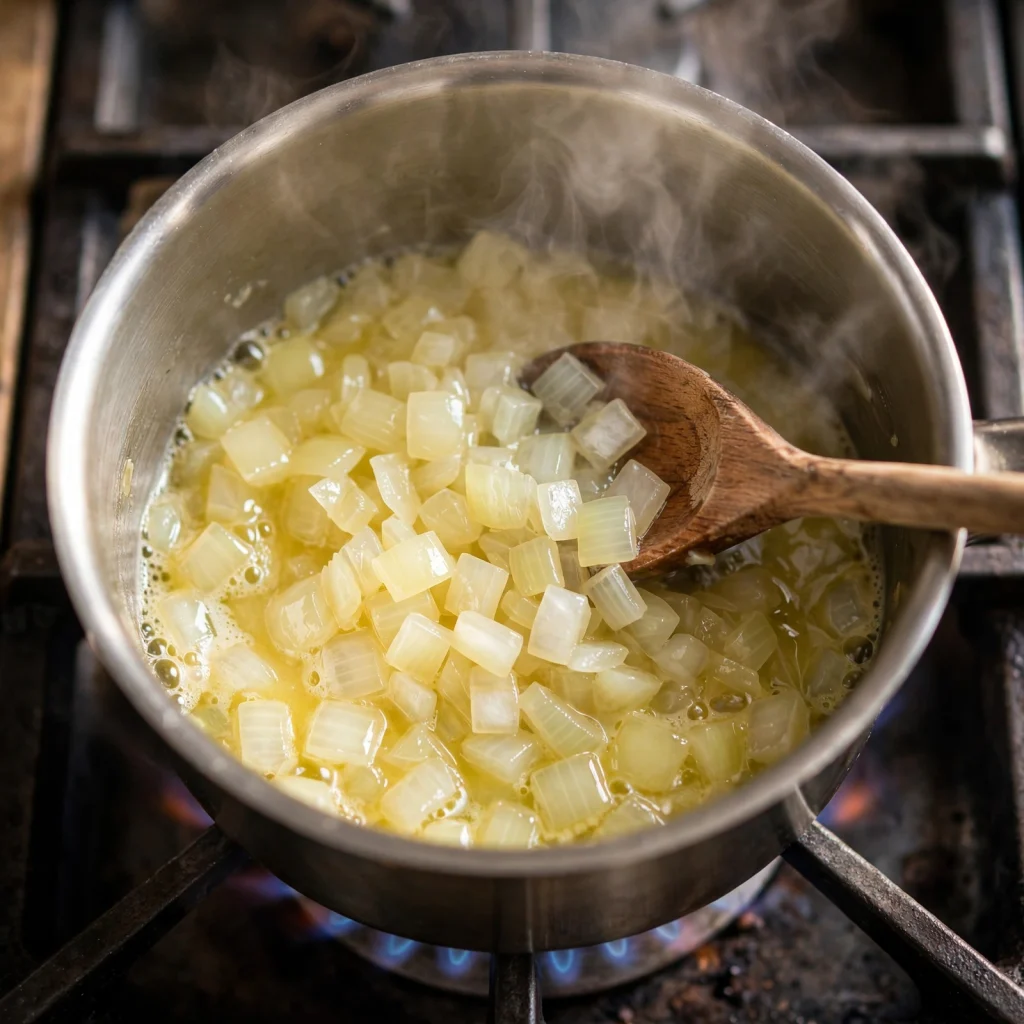
3. Soften the onion. Add the butter to the pot with the bacon fat and melt over medium heat. Add the onion and cook for 3–4 minutes, until it turns soft and see-through — not browned. Stir in the garlic and cook 30 seconds more, until you can smell it.
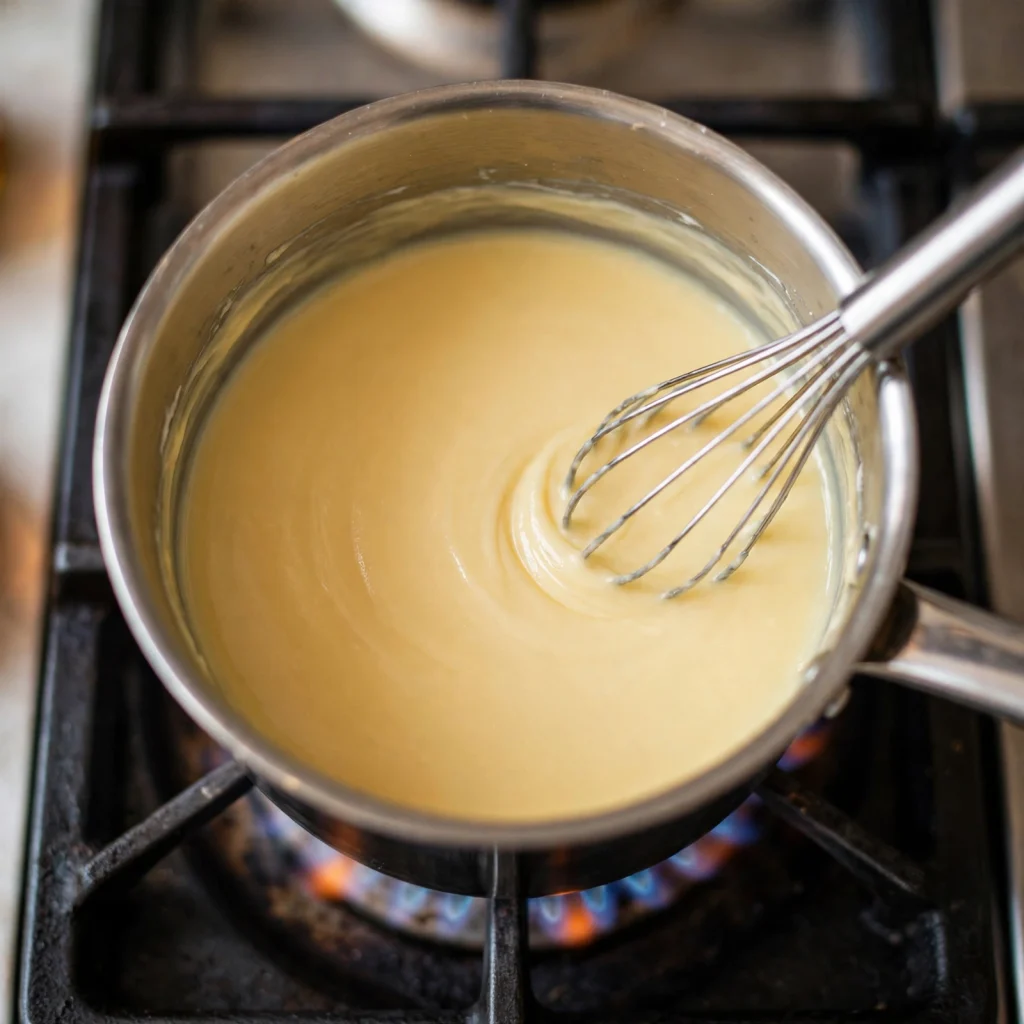
4. Build the base. Sprinkle the flour over the onion and stir constantly for 1–2 minutes — this is the step that thickens the soup, so don’t rush it or skip it. It should turn into a smooth, pale-gold paste, not lumps. Slowly whisk in the broth, then the milk, a little at a time, whisking until totally smooth after each addition. Bring to a gentle simmer and let it cook, stirring now and then, for 5–7 minutes, until it’s thickened slightly and coats the back of a spoon.
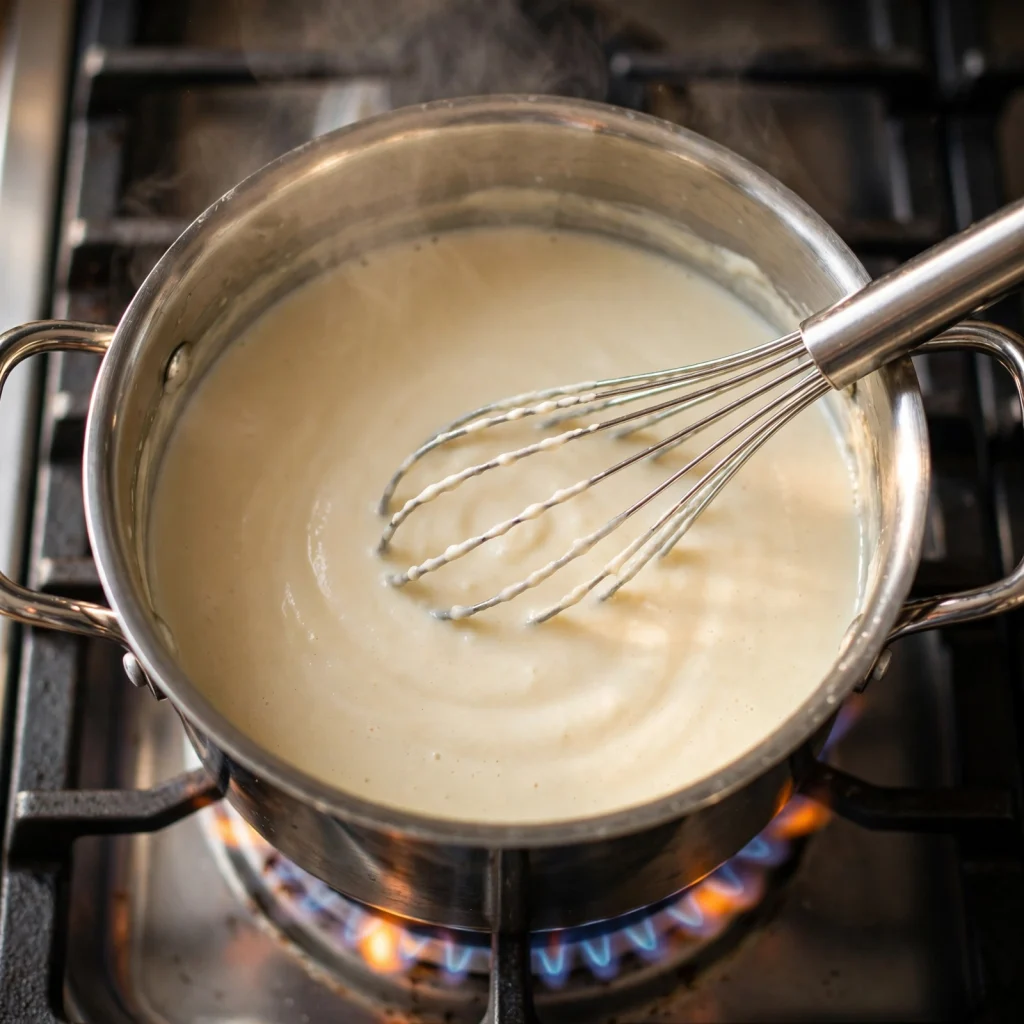
5. Add the potatoes. Stir in the baked potato chunks, the salt, and the pepper. Let everything simmer together for 5 minutes, just to warm the potatoes through and let the flavors mix. Use a spoon or potato masher to break up as many or as few chunks as you like — mash more for a smoother soup, leave more whole for a chunkier one.
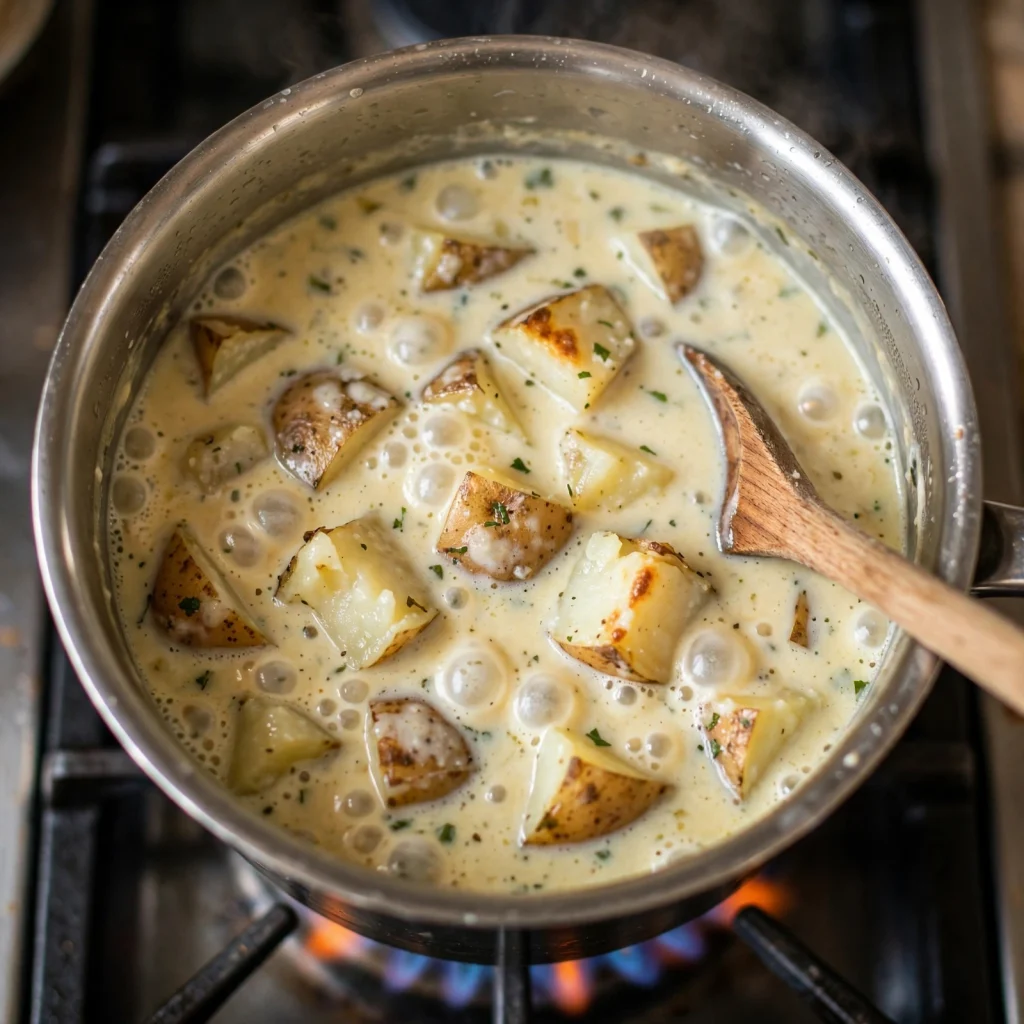
6. Take it off the heat, then finish it. This is the step that keeps the soup from curdling: turn off the burner completely before you add the sour cream. Stir in the room-temperature sour cream and the shredded cheddar, a handful at a time, until it’s smooth and melted. Adding dairy to a pot that’s still boiling is what makes it split into little curdled bits — off the heat, it stays silky.
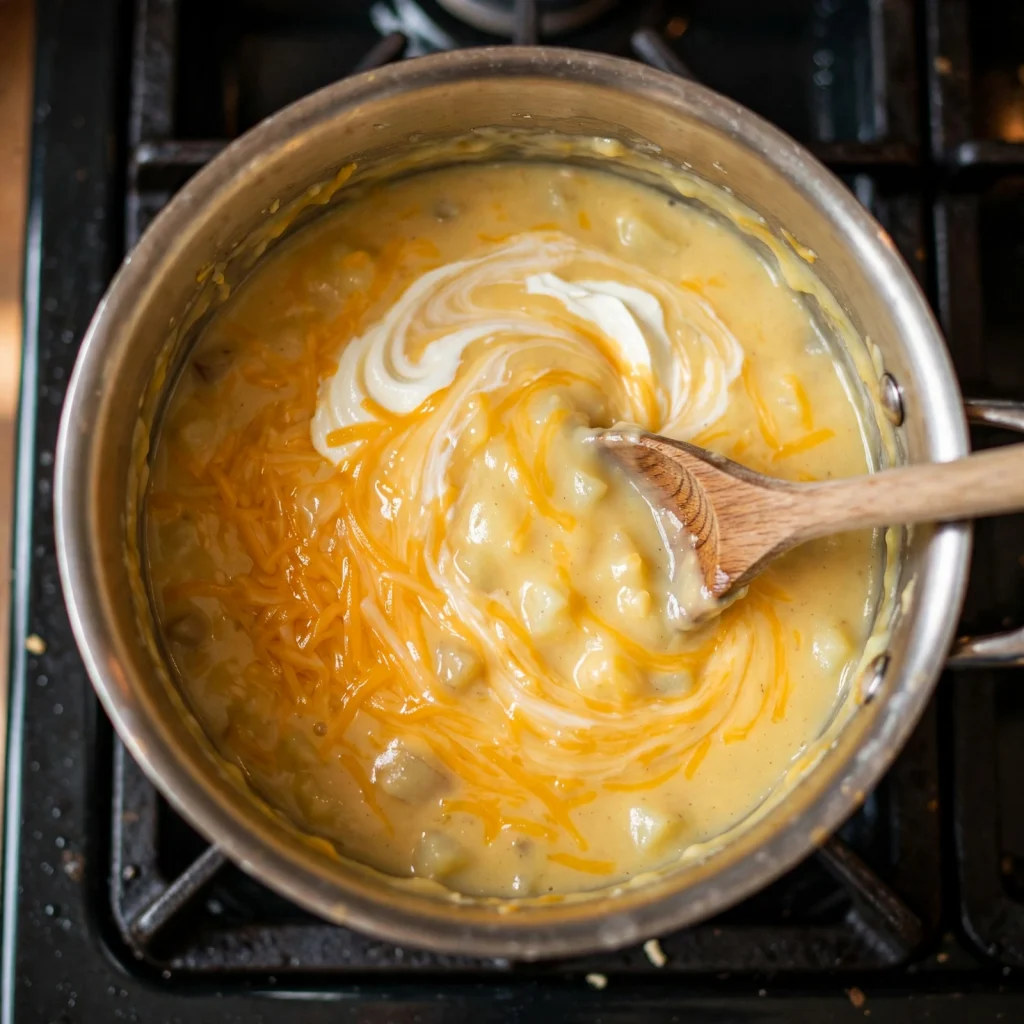
7. Serve. Ladle into bowls and top with the crumbled bacon, extra cheddar, and chives.
Tips for the Best Baked Potato Soup
- Room-temperature sour cream blends in smoother than cold sour cream straight from the fridge — take it out while the soup simmers.
- Too thick? Whisk in extra warm broth or milk, a splash at a time, until it’s the thickness you want.
- Too thin? Let it simmer uncovered for a few more minutes before you add the dairy — the water needs to cook off, not the cheese.
- Freshly shredded cheese melts smoother than the pre-shredded bagged kind, which is coated in a starch that can make the soup grainy.
- Save some potato chunks unmashed if you like a chunkier soup — mash the rest with the back of a spoon.
- Bake the potatoes a day ahead to make this a faster weeknight soup — just reheat gently before scooping.
FAQ
Why did my baked potato soup turn out gluey or pasty?
This usually means too much flour went in relative to the liquid, or the potatoes got over-mashed into a paste. Stick to the flour amount here and add potatoes in loose chunks, mashing only some of them.
Can I use boiled or microwaved potatoes instead of baking them?
You can, but the soup will likely turn out looser and less rich, since boiled potatoes hold extra water. If you do boil them, drain very well and let them steam-dry for a few minutes before adding to the pot.
Why did my sour cream curdle?
It went into a pot that was still simmering or boiling. Always take the pot off the heat first, and let cold dairy come closer to room temperature before stirring it in.
Can I make this soup ahead of time?
Yes — make it through step 5, then refrigerate. Reheat gently on the stove and stir in the sour cream and cheese off the heat right before serving.
Does this soup freeze well?
Dairy-based soups like this one can separate a little after freezing. If you plan to freeze it, freeze it before adding the sour cream and cheese, then stir those in fresh after reheating.
Can I make this vegetarian?
Yes — skip the bacon, use vegetable broth, and cook the onion in butter or olive oil. Top with extra cheddar or some smoked paprika for a similar savory note.
Serving and Storage
This baked potato soup is filling enough on its own, alongside crusty bread or a simple green salad. Store leftovers in an airtight container in the fridge for up to 4 days, and reheat gently over low heat, stirring often, so the dairy doesn’t separate.
That’s really all there is to it: bake the potatoes properly, build a real roux, and keep the heat off when the dairy goes in. Follow those three things and this baked potato soup comes out thick, creamy, and exactly the way you pictured it — no grit, no watery bowls, no curdled specks. Enjoy!
Also try our Sausage Potato Soup or Corn Chowder — both hearty one-pot soups ready in under an hour.

Baked Potato Soup
Ingredients
Method
- Bake the potatoes first. Preheat the oven to 400°F (200°C). Pierce each potato a few times with a fork and bake directly on the oven rack for 45–60 minutes, until a fork or knife slides in with no resistance (this is what "fork-tender" means). Cool slightly, halve, scoop the flesh into rough chunks, and set aside.
- Cook the bacon in a large pot or Dutch oven over medium heat until crisp, 6–8 minutes. Transfer to a paper-towel-lined plate and crumble once cool. Keep about 1 tablespoon of the bacon fat in the pot; discard the rest.
- Melt the butter in the pot with the bacon fat over medium heat. Add the onion and cook 3–4 minutes, until soft and translucent. Stir in the garlic and cook 30 seconds more.
- Sprinkle in the flour and stir constantly for 1–2 minutes, until it forms a smooth, pale-gold paste. Slowly whisk in the broth, then the milk, a little at a time, whisking until smooth after each addition. Simmer 5–7 minutes, until slightly thickened.
- Stir in the baked potato chunks, salt, and pepper. Simmer 5 minutes to warm through. Mash some of the potato chunks with a spoon for a thicker soup, or leave more whole for a chunkier one.
- Remove the pot from the heat completely. Stir in the room-temperature sour cream and the shredded cheddar, a handful at a time, until smooth and melted.
- Ladle into bowls and top with the crumbled bacon, extra cheddar, and chives.
Notes
- Take the **pot** completely off the heat before stirring in the sour cream — adding cold dairy to a simmering pot is what causes curdling
- Refrigerate leftovers up to 4 days; reheat gently over low heat.
- If freezing, freeze before adding the sour cream and cheese, then stir those in fresh after reheating, as dairy can separate after freezing.
Nutrition (Estimated per serving)
Calories: ~430 | Carbohydrates: ~30g | Protein: ~14g | Fat: ~28g | Saturated Fat: ~15g | Sodium: ~650mgEstimated only — values will vary based on exact ingredients used.