
Cauliflower Soup: 5 Tips for a Creamy, Never Bland Bowl
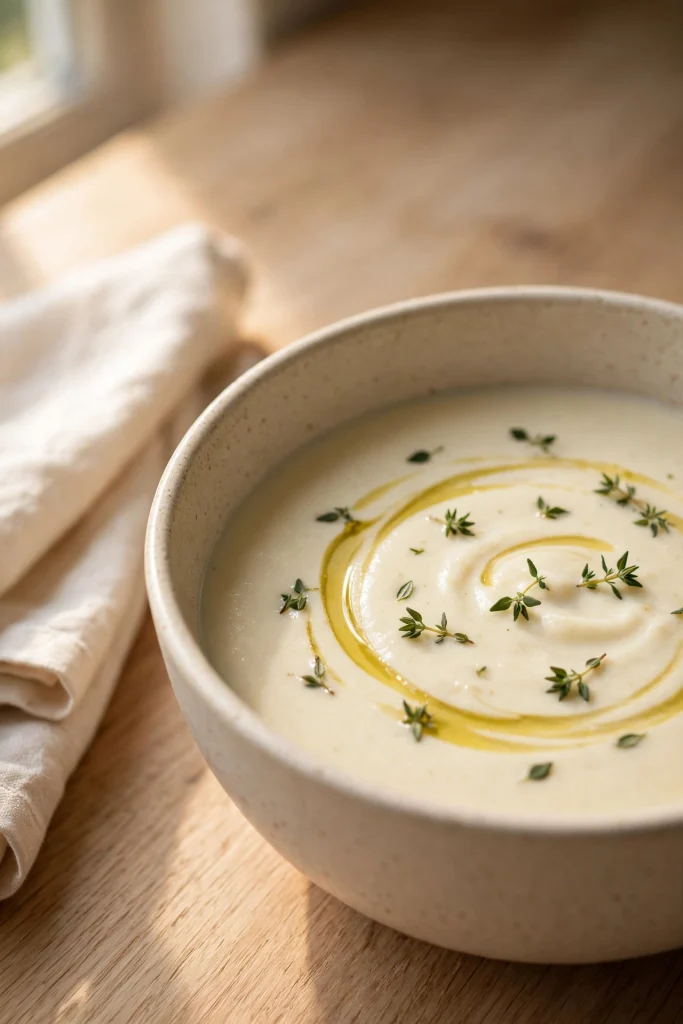
Table of Contents
Cauliflower soup sounds like the perfect weeknight bowl — simple, warming, healthy. Then you make it and wonder where all the flavor went.
That’s the number-one thing people say after making this dish: bland. And it makes sense. Cauliflower is naturally mild. Boil it in broth and the liquid rinses out much of what little flavor it has, leaving behind something thin and flat. The second most common problem is a watery texture — more brothy than creamy. And the third, for anyone who has ever blended a full pot of steaming hot liquid without the right technique, is the blender lid flying off and the soup ending up on the ceiling instead of in the bowl.
This cauliflower soup is built around fixing all three of those problems. The key move is sweating the onion low and slow before any liquid goes in — just ten minutes, but it builds a savory base that the whole soup rests on. Then a spoonful of butter blended in at the end makes it silky-smooth without any cream. Total time is about 35 minutes.
Why This Recipe Works
Most recipes either dump everything in the pot at once (fast, but flat) or ask you to roast the cauliflower first (great depth of flavor, but 30 extra minutes). This recipe is the faster middle path: a proper low-heat sweat on the onion builds real flavor without an oven, total time stays under 40 minutes, and the finished bowl tastes like there’s cream in it — there isn’t.
The deliberate difference here: we blend in cold butter at the end. The blender’s motion disperses the butter throughout the hot soup, making the texture noticeably richer and smoother. It’s a simple technique, no extra equipment needed, and it works.
For the science behind sweating onions for flavor, Serious Eats has a great breakdown.
Ingredients
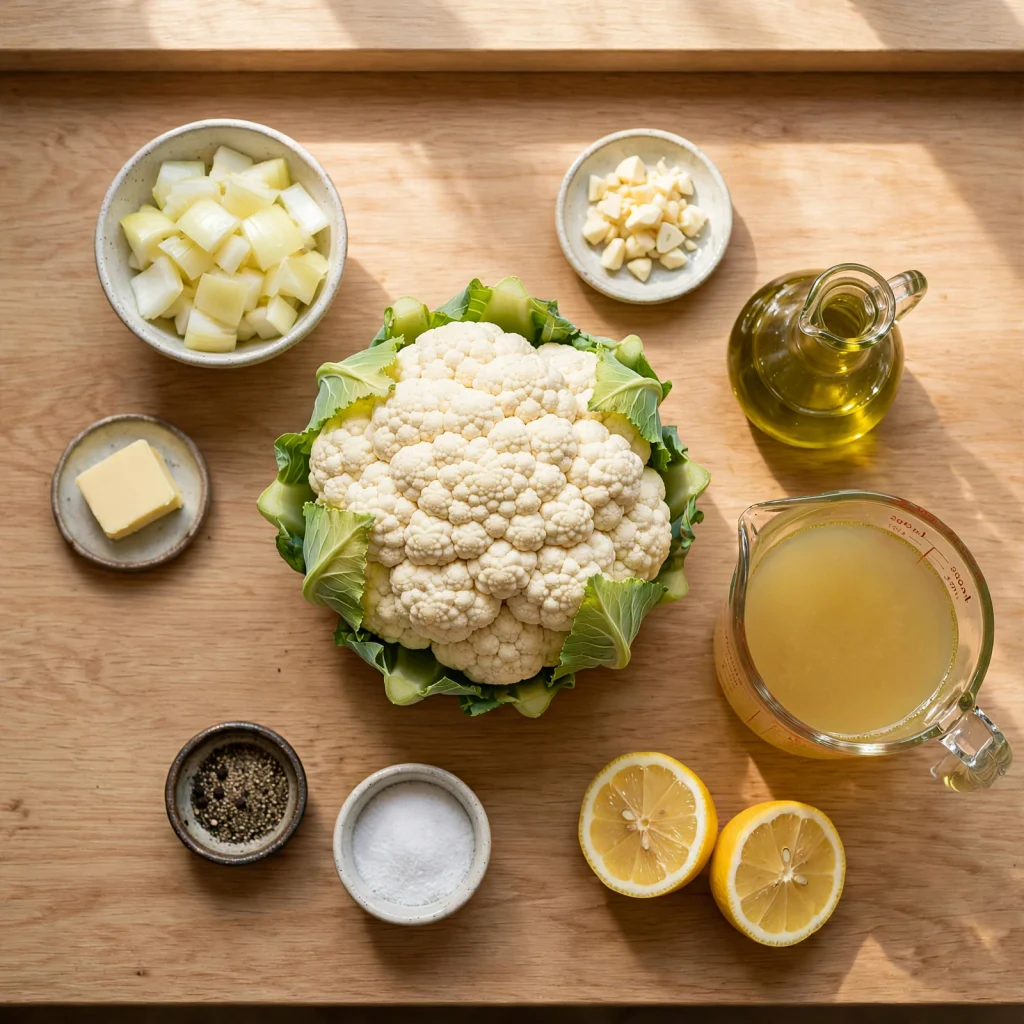
- 1 large head cauliflower (~2 lbs / 900g) — break it into small, bite-size florets; the stalk is fine to use too, just chop it roughly
- 1 medium yellow onion, roughly chopped
- 3 garlic cloves, roughly chopped
- 2 tablespoons (30ml) olive oil
- 4 cups (960ml) vegetable broth — or chicken broth. UK readers: vegetable stock is the same thing. If using a stock cube, see Step 1. Use a good-tasting broth; it’s most of the liquid.
- 1 tablespoon (14g) unsalted butter — blended in at the end for silkiness. For a dairy-free version, use an extra tablespoon of olive oil instead.
- 1 tablespoon (15ml) fresh lemon juice — don’t skip this; it lifts the whole soup
- Fine salt and black pepper, to taste
Want extra flavor? A small pinch of ground nutmeg or 3–4 fresh thyme sprigs dropped in with the broth (Step 3) make a lovely addition. Remove the thyme before blending.
To garnish: a drizzle of olive oil, fresh thyme leaves, or sliced chives. Any or all of these work.
Before You Start
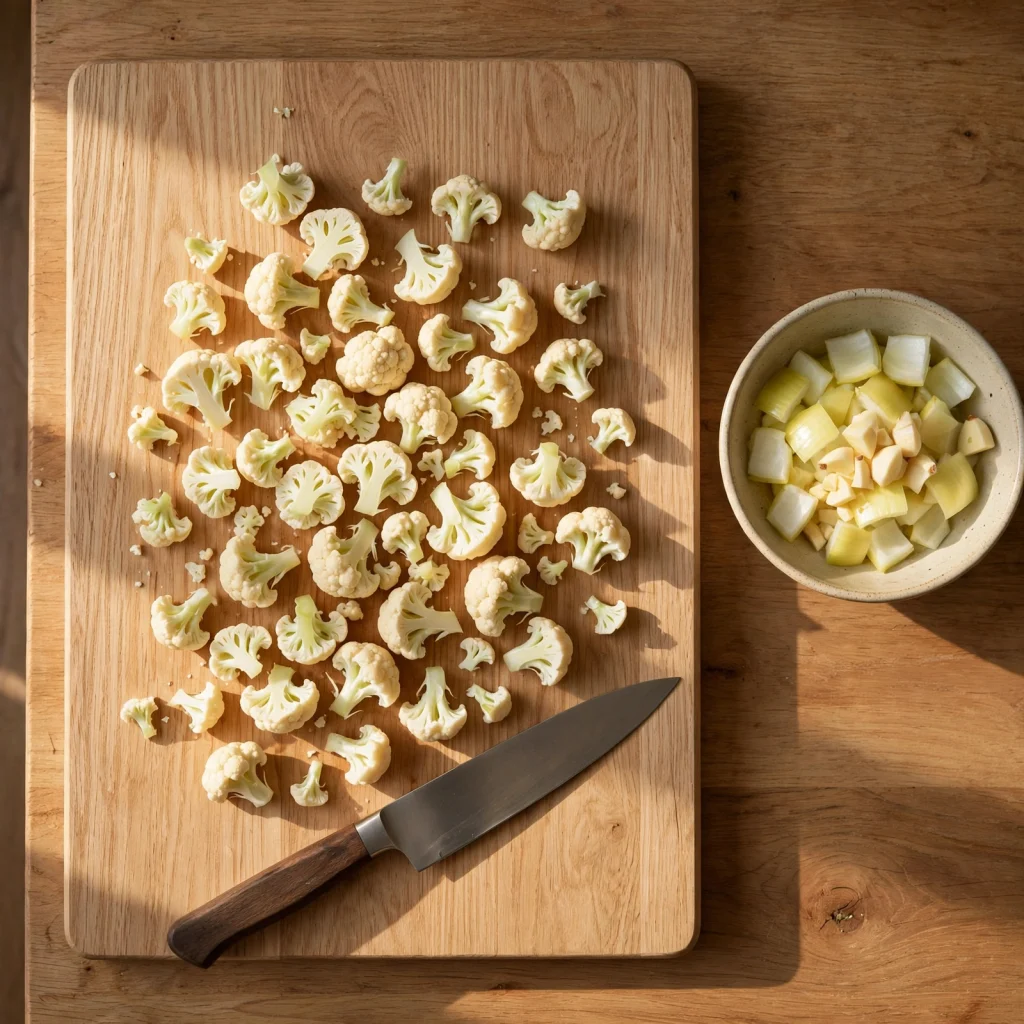
- Cut the cauliflower into small bite-size florets, roughly 1 inch (2.5cm). Don’t worry about perfect shapes — they’re all getting blended.
- Roughly chop the onion and garlic. No need for fine dice; they’ll be blended too.
- Measure out the broth, or prepare it (see Step 1).
- Get your blender or immersion blender ready. (An immersion blender — also called a stick blender — is the type that goes right into the pot. A regular blender works too; see the blending step for safe technique.)
How to Make Cauliflower Soup
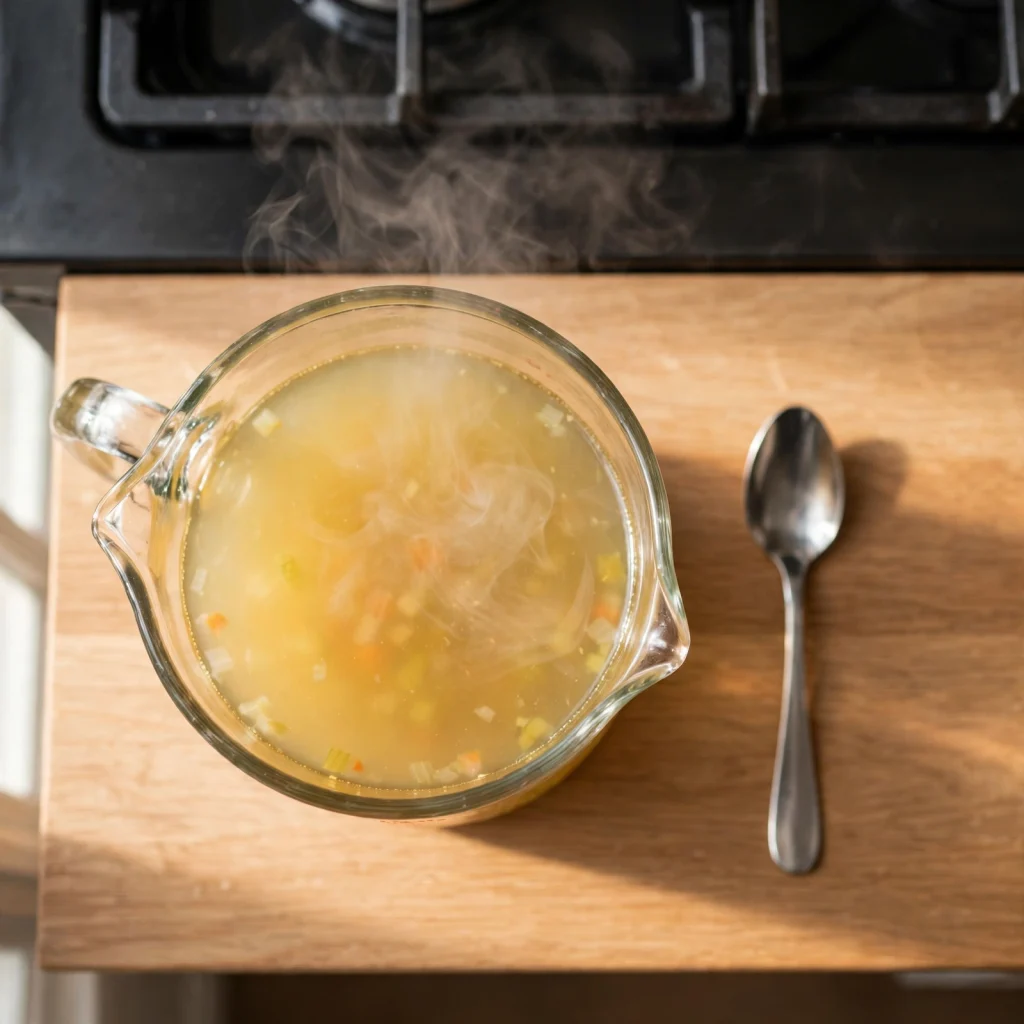
Step 1 — Get the broth ready. If using carton broth, measure out 4 cups (960ml) and set it aside. Using a stock cube? Dissolve it in 4 cups of hot (not boiling) water, stirring until fully dissolved and the liquid looks clear and golden. Set it aside.
Step 2 — Sweat the onion (don’t rush this step). Warm the olive oil in a large pot or Dutch oven over low heat. Add the chopped onion and a generous pinch of salt. Cook, stirring occasionally, for 8–10 minutes, until the onion is completely soft and see-through — not browned or golden, just pale and glistening. Add the garlic and cook 1 more minute, until it smells fragrant. “Sweating” just means cooking gently with no color — that low, slow heat is where the flavor base builds.
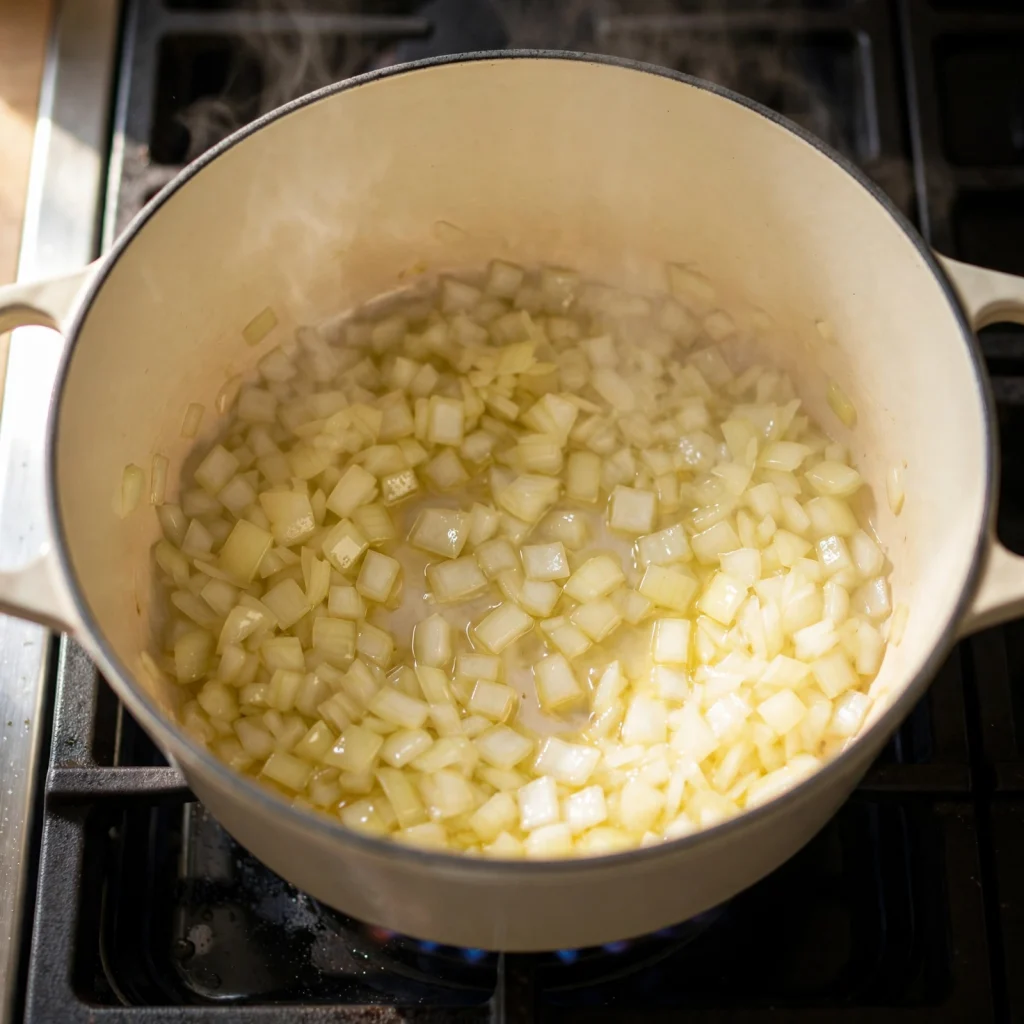
Step 3 — Add the cauliflower and broth. Pour in the broth and add all the cauliflower florets. Raise the heat to medium-high and bring to a gentle simmer — steady small bubbles, not a rapid boil. Cook for 15–18 minutes, until you can slide a fork through the thickest floret with no resistance at all. The pieces need to be very soft; anything still firm won’t blend into a smooth soup.
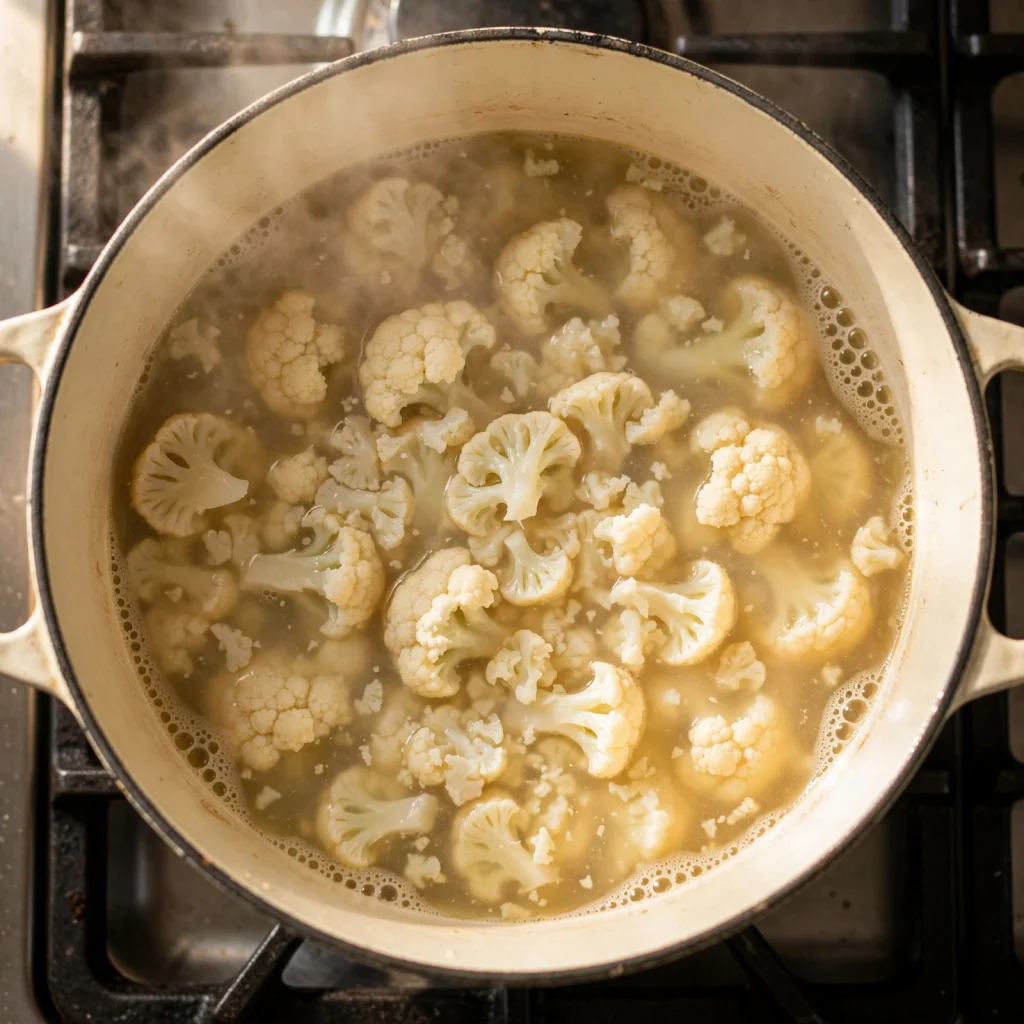
Step 4 — Blend, safely. Take the pot off the heat and let it cool for 3–5 minutes.
- Immersion (stick) blender: blend right in the pot until completely smooth — about 60–90 seconds of steady blending. This is the safest and easiest method.
- Stand blender: fill it no more than halfway (hot liquid expands as it blends). Hold a folded kitchen towel firmly over the lid, start on low, then increase speed. Blend in batches if needed. Never fill it more than halfway — the pressure can blow the lid off and spill very hot liquid.
Once smooth, add the tablespoon of cold butter and blend again for 20 seconds. It disperses through the hot soup and makes the texture noticeably silkier.
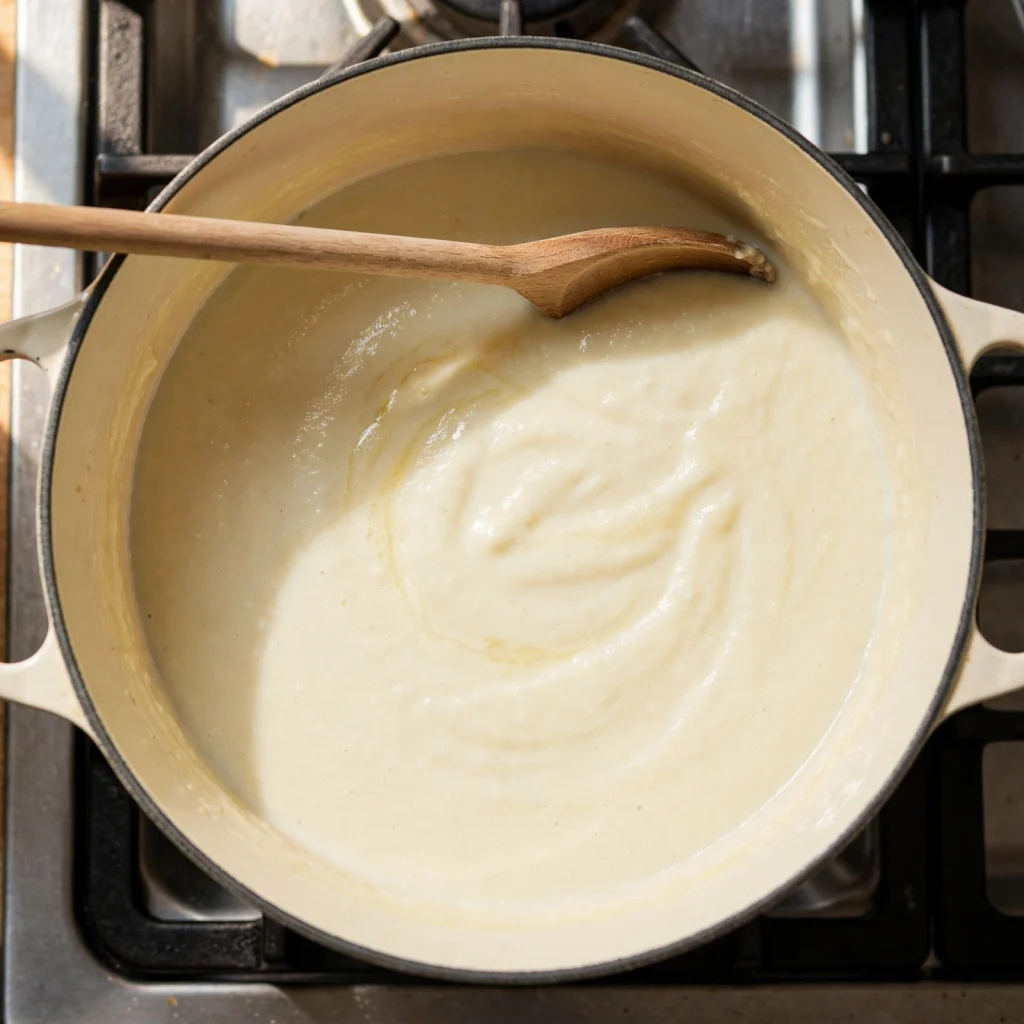
Step 5 — Season and serve. Stir in the lemon juice. Taste the soup and add salt a little at a time, stirring and tasting after each addition. A properly seasoned cauliflower soup should taste bright and savory — if it still seems flat, add more salt before reaching for anything else. Add black pepper to taste, then ladle into bowls and garnish as you like.
Tips for the Best Cauliflower Soup
- Don’t rush the onion. Ten minutes feels long the first time, but this is the step that separates a flat soup from one with real depth. Give it the time.
- Season in layers, not all at once. A pinch of salt when the onion goes in, another when the cauliflower goes in. This builds flavor through the cook rather than making the soup taste salty at the end.
- Blend until truly smooth. With an immersion blender, 60–90 solid seconds is the minimum. Run your finger along the spoon — no graininess, no tiny lumps. If it still feels slightly rough, keep blending.
- Thin it after blending if needed. The soup thickens as it sits. If it’s too thick after 10 minutes, stir in a splash of hot water or broth until it’s the consistency you want.
- Lemon juice goes in last. Add it after blending. It lifts the flavor from heavy to bright — not lemony, just alive.
FAQ
Why does my cauliflower soup always taste bland?
Almost always it’s one of two things: the onion wasn’t sweated long enough to build a flavor base, or the soup needs more salt. Taste it after blending and season gradually. The lemon juice also makes a real difference — don’t skip it.
Can I use an immersion blender instead of a regular blender?
Yes, and it’s actually the easier option — no transferring hot liquid, no blending in batches. The result is very slightly less silky than a stand blender, but blending for a full 60–90 seconds closes the gap almost entirely.
Can I make this vegan or dairy-free?
Yes. Use vegetable broth and swap the butter for the same amount of extra olive oil. The soup is still smooth and delicious; it just has a slightly lighter finish.
Can I freeze cauliflower soup?
Yes. Let it cool completely, then freeze in sealed containers for up to 3 months. Thaw overnight in the fridge. It may look slightly grainy after thawing — reheat gently over medium-low heat, stir well, and the texture comes back together. A quick blend with the immersion blender fixes it instantly if needed.
My soup is too thin. How do I fix it?
Simmer it uncovered over medium heat for 5–10 minutes; the liquid reduces and the soup thickens. Or blend in a small cooked potato — stir it in and blend briefly — for an immediate fix that doesn’t change the flavor.
Serving and Storage
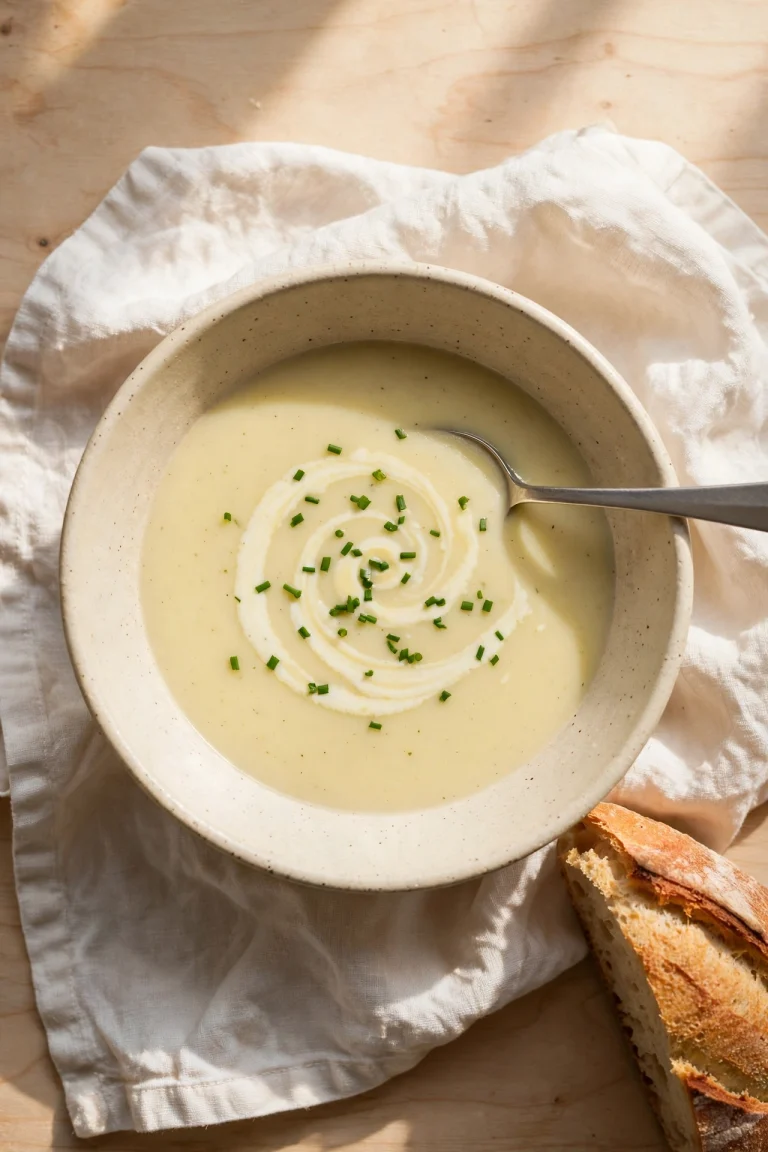
Ladle the soup into bowls and drizzle with olive oil. A crack of black pepper and a few fresh thyme leaves or chives on top keep it simple and elegant. Crusty bread, a grilled cheese sandwich on the side, or a small green salad all make it a proper meal.
Leftovers keep in the fridge for up to 4 days in a sealed container. Reheat gently over medium-low heat, stirring, and splash in a little water or broth if it’s thickened up. This cauliflower soup freezes well for up to 3 months.
This is the kind of soup that surprises people. Simple ingredients, one pot, done in 35 minutes — and when the onion base is built right and the butter is blended in at the end, the bowl tastes genuinely rich. Warm and filling without being heavy.
Also try our Sausage Potato Soup: 5 Fixes for a Creamy, Never Grainy Bowl — same one-pot method, ready in under 1 hour.
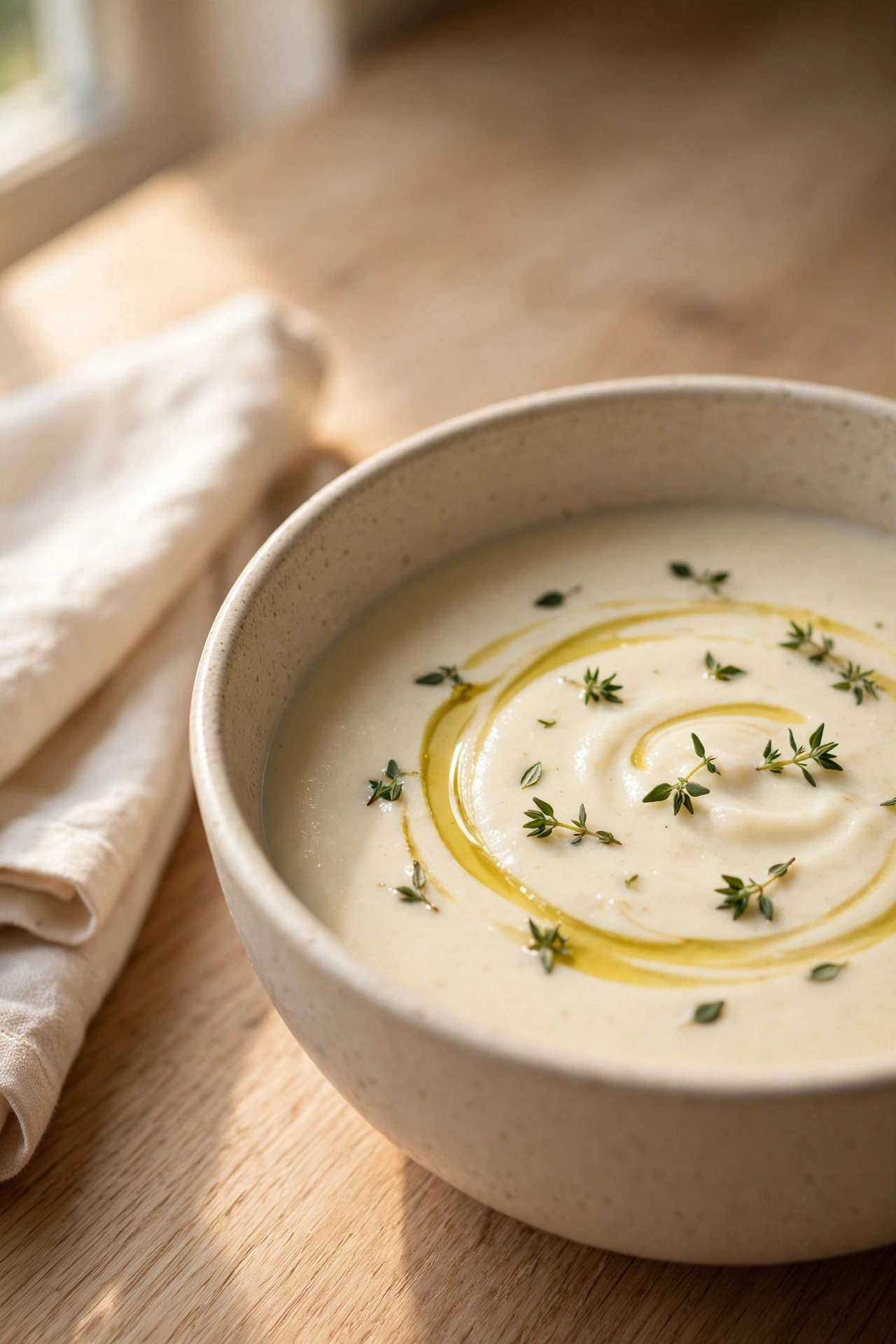
Cauliflower Soup
Ingredients
Method
- **Get the broth ready.** Using carton broth? Measure out 4 cups (960ml) and set it aside. Using a stock cube? Dissolve it in 4 cups (960ml) of hot water, stir until the cube has fully dissolved and the liquid is clear and golden. Set aside.
- **Sweat the onion.** Warm the olive oil in a large pot or Dutch oven over low heat. Add the chopped onion and a generous pinch of salt. Cook, stirring occasionally, for 8–10 minutes, until the onion is completely soft and translucent — not brown, just pale and glistening. Add the garlic and cook 1 more minute until fragrant.
- **Add cauliflower and broth.** Add the cauliflower florets and pour in the broth (plus any optional thyme or nutmeg). Raise the heat to medium-high and bring to a gentle simmer. Cook for 15–18 minutes, until you can slide a fork through the thickest piece of cauliflower with no resistance. The pieces should be very soft.
- **Blend safely.** Take the pot off the heat and let it cool for 3–5 minutes. Then blend until completely smooth: use a stick (immersion) blender right in the pot for 60–90 seconds, OR carefully ladle into a stand blender no more than halfway, hold a folded kitchen towel firmly over the lid, and blend in batches. Add the cold butter and blend for 20 more seconds — this makes the soup silky.
- **Season and serve.** Stir in the lemon juice. Taste and add salt gradually, stirring and tasting after each addition, until the soup is bright and savory. Add black pepper to taste. Ladle into bowls, garnish, and serve.



One Comment